Is a box truck harder to insure than a van?
It usually draws more questions: weight, backing, liftgates, drivers and cargo. Most carriers that write vans also write box trucks.

Vans and box trucks do much of the same work, but carriers usually rate them differently. How weight, drivers, backing exposure and the load can change the insurance when you choose one over the other.
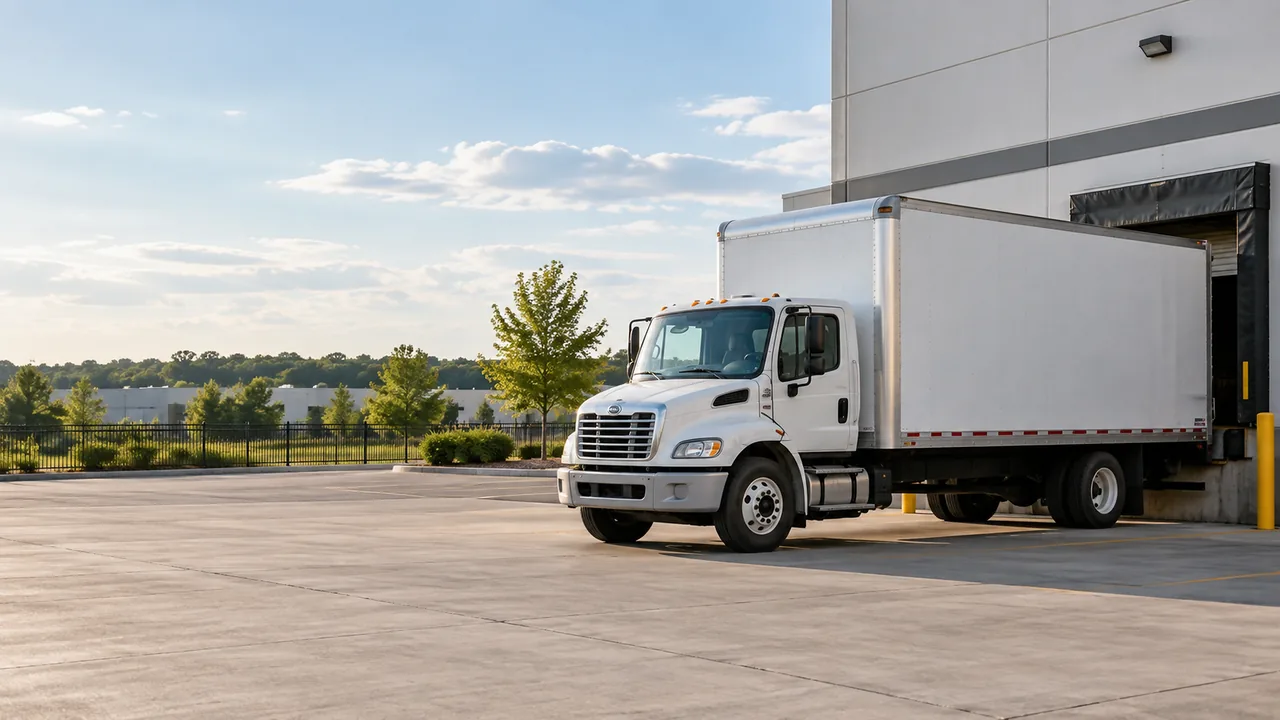
Quick answer
A cargo van is usually the simpler vehicle to insure: lighter, rated closer to a pickup and drivable by almost anyone with a regular license. A box truck typically carries more weight and more liability exposure, often needs motor truck cargo for the load and raises questions about backing, liftgates and what's in the box. Choose the vehicle for the work and expect the box truck to draw more underwriting questions.
Commercial Auto + Fleet Insurance
CaliforniaUp to 50 VehiclesWe’re here to help.
| Feature | Cargo van | Box truck |
|---|---|---|
| Typical GVWR | Up to about 10,000 lbs | About 10,001 to 26,000 lbs |
| Driver's license | Regular license | Regular license under 26,001 lbs GVWR; CDL at or above it |
| How it's rated | Close to a heavy pickup | As a medium-duty truck, with weight and body type counting for more |
| Common claims | Rear-ends in traffic, parking-lot scrapes, break-ins | Backing into docks and posts, low clearances, liftgate damage, wide turns |
| What's inside | Usually tools and parts, which aren't covered as cargo | Often customers' orders or products, which call for motor truck cargo |
| Upfits | Shelving, ladder racks, partitions | Liftgates, refrigeration units, E-track and ramps |
| Typical trades | HVAC, alarm, painting, flooring | Cabinets, flooring, distributors, breweries |
| Motor Carrier Permit | Rarely needed at these weights | Can apply, depending on weight and use |
Each vehicle has its own page with more detail: cargo van insurance and box truck insurance quote.
Box trucks usually sit above 10,000 lbs GVWR, where a Motor Carrier Permit can apply depending on use; our guide to how the MC 65 M filing works explains who generally needs one.
At 26,001 lbs GVWR and up, drivers generally need a commercial license. Many box trucks used by contractors and distributors are built just under that line so employees with a regular license can drive them, and carriers still tend to ask about each driver's experience with a larger vehicle.
Official sources
One big practical difference is what the driver can see. A van handles much like a large pickup. A box truck usually has no rear window, a long blind zone behind it and a tall roof, so backing into docks, clipping awnings and misjudging clearances are common box truck claims. Underwriters often ask about backup cameras, spotter rules and who's allowed to drive the larger units. Federal Motor Vehicle Safety Standard 111 has generally required a rearview image on new trucks and vans rated 10,000 lbs GVWR or less since May 1, 2018, but it doesn't reach box trucks rated above that, so whether one has a camera depends on how it was built or upfitted.
A driver who's only driven vans deserves a ride-along before taking a box truck out alone. Our guide to fleet safety and claims defense covers cameras and the training that goes with them.
Official sources
A van usually carries the business's own tools, parts and materials, which auto insurance generally doesn't cover; they belong on an equipment policy. A box truck more often carries goods for customers, pallets of product or finished work, and that's where cargo insurance for distributors comes in. California's auto insurance statute generally lets a policy exclude liability for damage to property an insured is transporting or has in its charge, which is one reason the load usually needs a form of its own.
Distributors and breweries running both often put tools and parts in vans and deliveries in box trucks. Tell us what each vehicle carries so cargo limits match the loads; see box truck insurance for distributors for a typical distributor schedule.
Official sources
Vans and box trucks tend to attract different thieves. A cargo van with ladders on the roof advertises tools inside, and a forced side door is a familiar claim: The damage to the van is usually comprehensive, while the stolen tools fall to an equipment policy. A box truck is more often taken whole, load and all, from a curb or an unfenced lot.
A bulkhead between the cab and the cargo area, shelving locks and parking box trucks with the rear door against a wall all tend to deter theft, and underwriters typically ask where each unit spends the night. How either vehicle is usually valued after a theft is covered on our physical damage coverage for trucks page.
Many fleets mix the two, and one commercial auto policy can list both. The vans are usually rated as light vehicles and the box trucks as medium-duty units, each with its own physical damage deductible. Adding a first box truck to a van fleet is a good moment to review limits, drivers and cargo; our page on fleet insurance for 5 to 10 vehicles covers what carriers look at as the schedule grows, and the coverages are listed on our commercial auto insurance in California page.
It usually draws more questions: weight, backing, liftgates, drivers and cargo. Most carriers that write vans also write box trucks.
Box trucks usually need drivers comfortable with size and blind spots. Limit who drives them and train newcomers.
Say what the box truck carries and whose goods they are. It usually decides whether you need motor truck cargo and at what limit.
A liftgate or refrigeration unit often adds real value. List it with the truck so physical damage can cover the whole unit.
Timing depends on the carriers and your loss history.
Have ready: vehicle list with VINs, driver list, current declarations page, loss runs.
Next Level Experience. Insurance Done Right.
Fleet quotes for California businesses running up to 50 trucks and vans.