Can different trucks have different deductibles on one policy?
Usually, yes. Physical damage deductibles are chosen vehicle by vehicle, even on a single fleet policy, so a new truck and an old one can differ.

Several trucks can sit on one commercial auto policy or on separate policies, one per vehicle. How the two setups differ on limits, renewals, certificates and claims, and when splitting a truck off may still make sense.
Quick answer
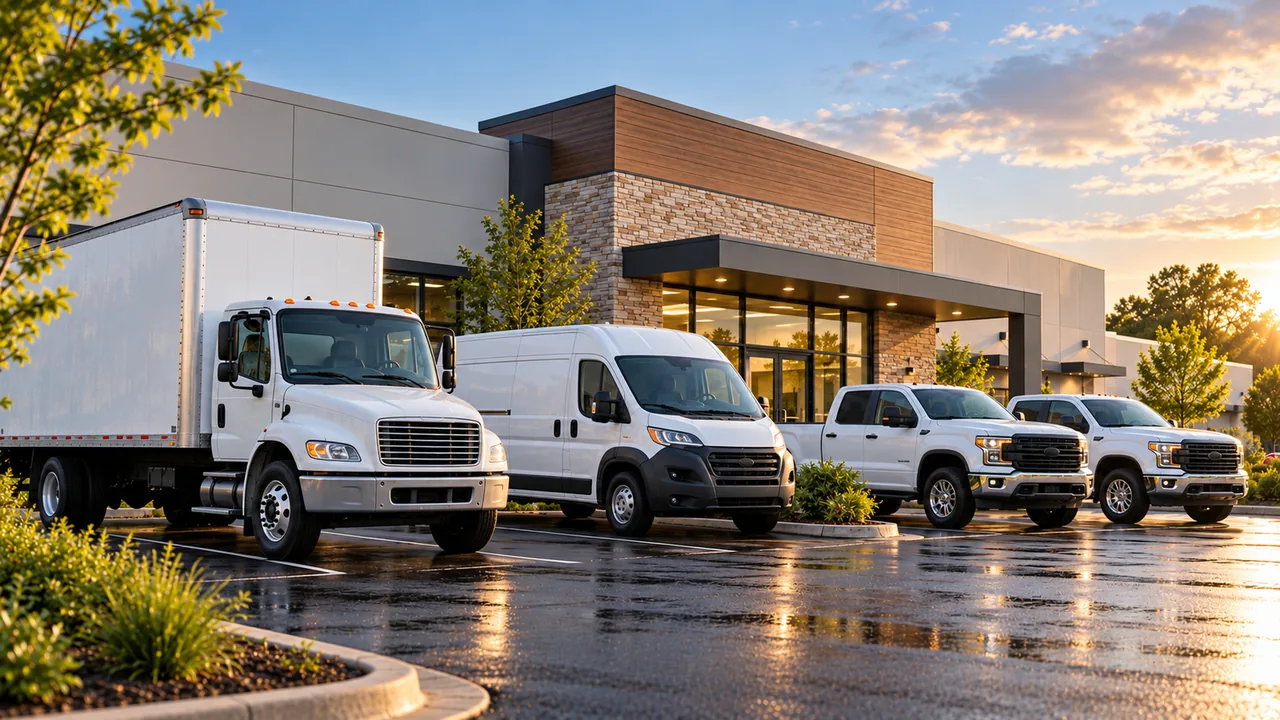
For most businesses with more than a couple of work vehicles, one commercial auto policy listing every truck is the simpler and usually stronger choice: one limit, one renewal date, one certificate and one loss history for underwriters to read. Separate policies per truck mainly make sense in narrow cases, such as a single heavy unit that only a specialty carrier will write or a vehicle owned by a different company.
Commercial Auto + Fleet Insurance
CaliforniaUp to 50 VehiclesWe’re here to help.
| Feature | One fleet policy | A policy per truck |
|---|---|---|
| Renewal dates | One date for every vehicle | A different date for each policy |
| Liability limit | One limit, usually $1 million, applied to whichever truck is involved | Each policy has its own limit, and they can drift apart |
| Certificates | One certificate names the business and can apply to each listed unit | A certificate per policy, and a customer may need several |
| Adding a vehicle | An endorsement to the existing policy | A new application and a new policy |
| Loss history | One record underwriters can read as a fleet | Scattered records that are harder to present |
| Carrier choice | One carrier for the schedule, chosen for your trade | Possibly several carriers, each seeing part of the picture |
| Coverage gaps | Fewer: the same coverages and wording on every unit | More likely: One policy may lack hired and non-owned or UM |
| Paperwork | One bill and one set of documents | Several bills and sets of documents to track |
If you're running five to ten vehicles across two or three policies now, our page on insurance for a fleet of 5 to 10 trucks covers what carriers look for when you combine them. The coverages on a combined policy are described on our commercial vehicle insurance quote page, and a business still at one to four vehicles can start from business auto insurance quote.
The coverage-gaps row is easy to overlook. Under Insurance Code section 11580.2, each auto liability policy generally carries uninsured motorist coverage unless the named insured deletes or reduces it by written agreement, so separate policies usually mean a separate UM decision, and a separate signed form, for each truck.
Official sources
A few situations can justify splitting a vehicle off. A heavy dump truck over 45,000 lbs GVWR may only fit a specialty market that won't write the rest of your vans, and it can be cleaner to place that unit alone. A truck owned by a different legal entity, such as an owner's separate equipment company, may need its own policy unless the entities can be named together. And a leased vehicle whose lessor sets requirements a fleet carrier won't meet can sometimes be placed separately.
Each of those is an exception worth discussing, not a reason to keep five pickups on five policies. Our page on dump truck insurance in California covers how heavier units are typically placed.
The cleanest move is usually to start the new fleet policy on a date that lines up with the earliest renewal, then cancel the remaining policies as of that same date. Canceling before a term ends typically returns the unused premium, though some policies return a little less than the full share when you cancel early. Insurance Code section 481 generally requires a policy that refunds on anything other than a pro rata basis, or charges a cancellation fee, to say so in writing, so check each old policy's terms before you pick the switch date.
Official sources
When an underwriter sees four separate policies, each with a year or two of history, it can be hard to tell whether the business is a careful operator or simply new. One schedule with three to five years of combined loss runs gives the account a clearer record, and a clean record tends to be easier to price on its own merits.
That combined record can also make the next step easier. A fleet that later grows past ten trucks moves into the conversations described on insurance for a growing fleet, and those usually start from the same loss runs. For how one limit generally applies across the schedule, see commercial auto liability insurance.
A fleet policy usually lists drivers for the whole account rather than tying each person to one truck. That suits crews who swap vehicles from day to day, and it can remove the question of whether the driver of a given truck was listed on that truck's policy.
It also means each driver's record typically counts toward the same account. One driver with a poor MVR can affect the fleet policy as a whole, which is a good reason to write down who may drive and to check records before hiring, not after. California generally allows a narrower fix: Insurance Code section 11580.1 lets the insurer and the named insured agree in writing that the policy won't apply while a person designated by name is driving, and some carriers raise that option when one record would otherwise weigh on the whole fleet.
Official sources
Usually, yes. Physical damage deductibles are chosen vehicle by vehicle, even on a single fleet policy, so a new truck and an old one can differ.
A truck left behind keeps its own renewal date and limit, and it's easy to forget when certificates go out.
Start the fleet policy on the date of the earliest renewal and cancel the others to match. Lining the dates up helps you avoid paying twice for the same truck or leaving one uninsured between policies.
Customers usually want to see the business insured, not one VIN. A fleet policy's certificate can apply to whichever listed truck shows up.
Timing depends on the carriers and your loss history.
Have ready: vehicle list with VINs, driver list, current declarations page, loss runs.
Next Level Experience. Insurance Done Right.
Fleet quotes for California businesses running up to 50 trucks and vans.