Box truckGVWR
- Weight
- 10,001–26,000 lbs typical
- CDL
- No (most)
- Trades
- Cabinets, flooring, distributors, breweries

Commercial auto for cabinet shops and installers: box trucks that carry finished cabinets to the job, install vans and the pickup that runs to the plywood supplier. Single vans welcome; fleets up to 50 vehicles.
Quick answer
A cabinet shop typically insures its box trucks, install vans and pickups on commercial auto, with each driver listed and liftgates noted. Most builders want a $1 million combined single limit. The auto policy is generally written for the trucks, not the cabinets inside them: Finished work in transit belongs on a transit or installation floater under inland marine.
Commercial Auto + Fleet Insurance
CaliforniaUp to 50 VehiclesWe’re here to help.
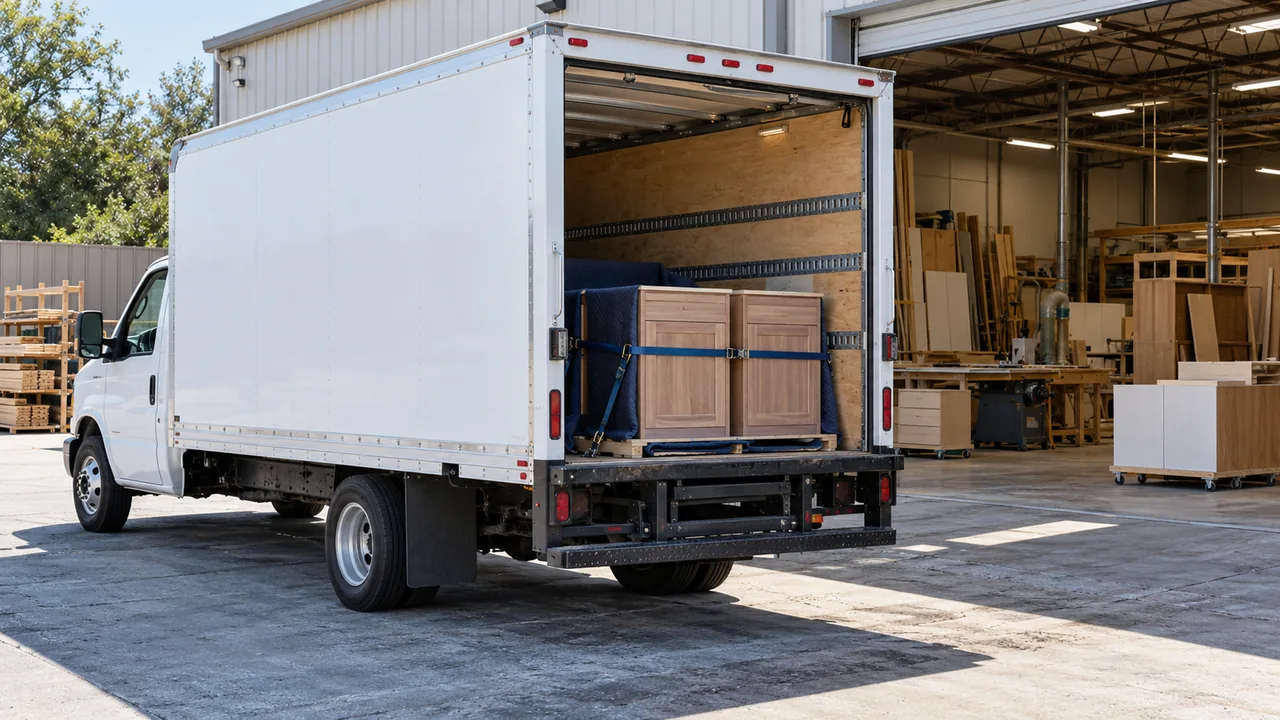
A cabinet shop's trucks do two jobs. Delivery trucks, usually box trucks from fourteen to twenty-six feet with a liftgate, carry finished boxes, doors, panels and countertops from the shop to the job site. Install vans follow, loaded with drills, levels, shims, scribing tools, hardware and the trim pieces that get cut on site. A pickup or a small cargo van handles runs to the sheet-goods supplier and the hardware distributor. Many shops also keep a long cargo van for small jobs, such as a vanity, a set of replacement doors or a punch list, and that van often goes home with the lead installer and quietly becomes the most-driven vehicle on the schedule. California licenses the making and the installing together: CSLB's C-6 Cabinet, Millwork and Finish Carpentry classification covers fabricating cabinets, doors and trim and also placing and finishing them in the building.
Where those trucks go shapes the risk. Kitchen remodels mean residential streets, steep driveways, tight cul-de-sacs and garages the box won't fit under. New construction means unpaved site roads and crowded tract streets where every trade is unloading at once. Multifamily jobs mean loading docks, a service elevator booked for a two-hour window and parking structures with low clearance. Most of the driving is local, but a shop serving builders across a region can put real miles on a box truck.
Many twenty-six-foot box trucks are built at 25,999 lbs GVWR so drivers don't need a commercial license, but not every one is. Check the door-jamb rating before a new truck goes to a driver without a CDL. Staying under the CDL line doesn't take a truck out of every program, though: CARB's Clean Truck Check covers nearly all diesel trucks rated over 14,000 lbs GVWR, which typically takes in a diesel box truck built at 25,999 lbs. Box truck insurance for cabinet deliveries covers how carriers rate those trucks.
Official sources
Liability generally covers what your trucks do to others: a box truck that backs into a client's garage door, a liftgate that drops a box onto a builder's employee, an install van that rear-ends someone on the way to a punch-list visit. Unloading is usually treated as part of using the truck, so an injury at the liftgate to someone who isn't your employee can be an auto claim. Most builders and general contractors ask cabinet installers for a $1 million combined single limit; commercial auto liability limits explains the options.
Physical damage generally covers the trucks: collision for a box that catches a low branch or a carport beam, comprehensive for an install van broken into overnight. A liftgate is part of the truck's value, so include it when we schedule the unit. Box trucks parked at the shop over a weekend can also lose batteries or catalytic converters to thieves; comprehensive typically handles that damage, less the deductible.
Damage to the cabinets in transit is a question shops ask often, and the auto policy usually doesn't answer it. Motor truck cargo coverage is designed for goods that belong to someone else, so it's rarely the right fit for cabinets you built and still own until they're installed.
Tract builders and apartment developers usually write $1 million combined single limit auto coverage into their installer agreements, along with a request to be named as additional insured. Shops that work mainly for homeowners and small remodelers have more room: $300,000, $500,000 or $750,000 can work when nobody requires more. If you sell through a dealer or a design showroom, read its installer agreement too, because many set their own auto requirements.
One contract clause to watch: Some builders make the cabinet installer responsible for damage until the kitchen is signed off. That's usually a property and transit question, not an auto one, but it often surprises shops that assumed the truck's insurance covered the load.
Commercial projects such as hotels, offices and senior housing tend to bring longer insurance exhibits. Primary and noncontributory wording and a waiver of subrogation often come alongside the additional insured request. Each is typically an endorsement, and not every carrier offers all three on a small account, so check before you bid.
A cabinet shop's box trucks seldom trigger a filing while they stay under the commercial license line. A heavier box truck can change that, so check truck insurance requirements in California before adding one to the fleet.
Shops with a steady crew of delivery drivers, a two-person rule for liftgate unloading and cameras on the box trucks tend to present well. Fleet safety and claims defense explains how those controls can help after a claim is filed.
If installers ever carry a few doors or a vanity to a job in their own cars, tell the underwriter. That's a non-owned exposure, usually easy to address with hired and non-owned auto insurance once it's known, and awkward to explain after a crash.
An independent installer with one van, setting cabinets delivered by someone else, is usually quoted much like a small service contractor. The van, the owner's record and where it parks drive the price. Cargo van insurance covers that rating in more detail. An installer who also picks up product at the shop and delivers it should say so, because that adds a delivery exposure to what looks like a service van.
A shop with five to ten units typically has one or two box trucks, several install vans and a pickup. Carriers often start to separate the delivery exposure from the install exposure and ask who's allowed to drive the box trucks. Shops this size often buy a second box truck before they hire a second delivery driver, so the installers end up driving it; plan the driver list along with the purchase. This is also the size where a written vehicle policy and annual MVR checks can start paying for themselves at renewal.
Eleven to fifty units usually means a production cabinet company serving tract builders and multifamily developers, with daily deliveries across several counties and install crews in vans. Underwriters at this size tend to weigh the loss trend, driver screening and how delivery routes are planned. A business auto policy at that size is built around the schedule, so add trucks before they're loaded for the first time.
A damaged upper or a cracked end panel often costs more than the box itself. It can mean remaking the piece, a second delivery, an installer waiting and a builder holding a payment. Much of the transit damage shops describe happens at low speed: a hard stop, a load that shifts on a turn, a liftgate edge, a dolly that tips on a curb.
Shops that keep damage down load in delivery order, so the first kitchen off is the last one on. They pad every box, strap against E-track or load bars rather than relying on stacking, keep doors and drawer fronts flat or racked separately and walk the route into the house or unit before carrying anything. Putting two people at the liftgate is safer for the cabinets and for the crew.
Weather counts, too. Unfinished boxes on an open trailer, or a box truck with a tired roof seam, can be ruined by one winter storm on the freeway. Check roof seams and door seals on the box trucks every fall and keep tarps and plastic wrap on board for the days a delivery can't wait.
None of that is auto coverage, but it can shape the account. An underwriter who sees few liftgate and backing claims from a shop that treats loading as a skill tends to read its box trucks as a better risk.
Usually not the auto policy. Physical damage is written for the truck; cabinets you own while they're on the way to a job call for transit or installation coverage on an inland marine policy.
Many twenty-six-foot box trucks are rated at 25,999 lbs, but some are heavier. Check the door-jamb label before handing a new truck to a driver without a commercial license.
Underwriters usually ask who drives the box truck. A small, steady group of delivery drivers reads better than whoever happens to be free that morning.
An injury at the liftgate to a builder's worker can be an auto liability claim, because unloading is generally treated as use of the truck. Your own crew's injuries usually go to workers' comp.
Paint vans and pickups on the same jobs.
Commercial auto for painting contractorsBuilders asking for your auto certificate.
Commercial auto for general contractorsTiming depends on the carriers and your loss history.
Have ready: vehicle list with VINs, driver list, current declarations page, loss runs.
Next Level Experience. Insurance Done Right.
Fleet quotes for California businesses running up to 50 trucks and vans.