Work pickupGVWR
- Weight
- Up to 14,000 lbs typical
- CDL
- No
- Trades
- Every trade

Commercial auto for landscape maintenance and installation companies: crew pickups, the trailers behind them and the small dumps that haul green waste. One truck or a full route fleet, quoted with top-rated national carriers.
Quick answer
A California landscaping company usually needs every crew truck, trailer and dump listed by VIN on one commercial auto policy, with liability that generally follows the trailer down the road. The mowers and blowers on the trailer usually fall outside auto coverage. For crew trucks and trailers, our starting liability figure is a $1 million combined single limit.
Commercial Auto + Fleet Insurance
CaliforniaUp to 50 VehiclesWe’re here to help.
A maintenance route runs on a crew truck and a trailer. The truck is usually a 3/4-ton or 1-ton pickup, sometimes with a stake bed or high sides, and behind it rides an open utility trailer with a ramp gate carrying a zero-turn or stand-on mower, a walk-behind and racks of trimmers, edgers and blowers. Some companies switch to enclosed trailers so equipment can stay loaded and locked overnight. A route day means a long list of stops, with the rig backing out of driveways, pulling away from curbs and squeezing into HOA streets lined with parked cars, which is where many of the small claims start.
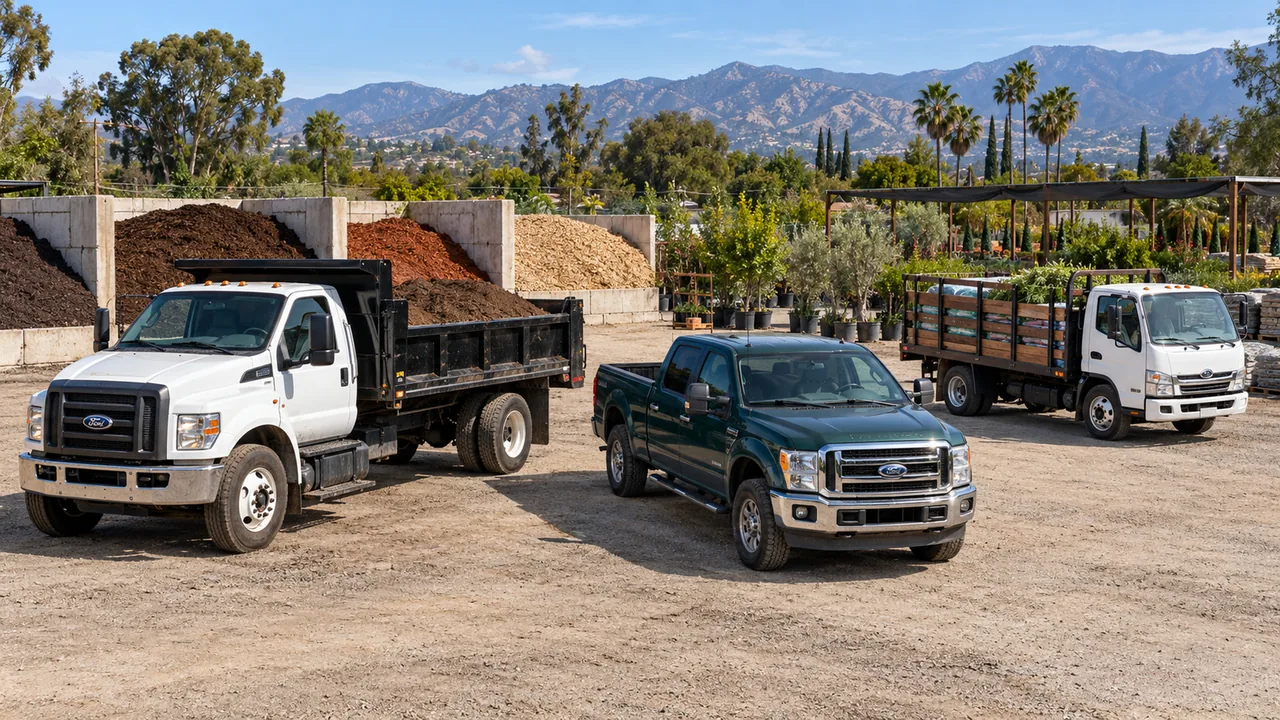
Installation crews pull heavier. A skid steer or mini excavator on a tag trailer, a dump trailer of base rock or decomposed granite and a bed full of irrigation parts and flats of plants is an ordinary morning. Many companies also keep a small dump or two, Class 3 to 5 chassis with high or mesh sides, for hauling clippings and prunings to a green waste facility and bringing mulch and soil back; dump truck insurance in California covers those trucks. As CSLB describes it, the C-27 landscaping classification covers that installation side of the trade: building, repairing and maintaining landscape systems, plus preparing and grading the ground for them.
Combination weight is worth watching. A crew pickup towing a loaded equipment trailer can approach the weight where a commercial license comes into play, and a heavy tag trailer behind a dump can cross it. Most underwriters will ask for the GVWR of each truck and trailer either way, so pull the numbers from the door stickers and the trailer's VIN plate before the quote. Our commercial truck insurance in California hub covers the heavier units.
Official sources
Liability usually travels with the trailer. While a trailer is hitched, the towing truck's liability generally extends to it, provided both are properly on the policy. The claims landscapers see are close to home: a trailer swinging into a parked car on a narrow street, a ramp gate dropped onto another vehicle, a coupler that let go on the freeway and clippings blowing off an untarped load into a windshield. Vehicle Code section 23114 generally bars driving a vehicle loaded so its contents can blow or spill off, so a loose green waste load can bring a citation along with the claim. HOA managers and commercial property clients typically expect a $1 million combined single limit, and that's the figure we price first.
Trailer physical damage is easy to miss. A trailer typically needs its own scheduled value to carry theft and collision coverage, and trailers disappear from yards and job sites, sometimes with mowers still strapped down. Whether the trailer half of that loss becomes an auto claim generally depends on the trailer being listed; insurance for work trailers explains how to schedule them.
Crew vehicles also get borrowed. A foreman who takes the route truck home or a crew member who runs to the nursery in a personal pickup creates exposure the policy should anticipate. List garaging honestly and add hired and non-owned auto insurance for the errands that happen in employees' cars. Seasonal help belongs on the driver list too, even someone who drives a company truck for a few weeks in spring.
Official sources
Plan on a $1 million combined single limit. HOA management companies, commercial property managers, school districts and city park contracts usually ask for exactly that, often with the client as additional insured. A residential route with no certificate requests can sometimes drop to $300,000, $500,000 or $750,000; check with your largest client before choosing. Park and school district contracts sometimes ask for coverage on any auto rather than scheduled vehicles only, which matters if crew members ever use their own trucks on the job.
Property management firms often send a vendor requirements packet that also asks for primary, noncontributory wording and a waiver of subrogation on the auto certificate. Those are endorsements that need the carrier's approval at binding, so include the packet with your quote request to give the certificate a better chance of coming out right the first time. Keep each client's packet with the renewal file, because HOA boards and management companies revise vendor requirements more often than most owners expect.
Your dumps and heavier crew trucks may need a Motor Carrier Permit depending on their weight. The MCP 65 permit guide explains the DMV filing the carrier makes when they do, and truck insurance requirements in California covers the license side.
Spray work gets its own question: A truck carrying herbicide for weed control is usually rated with that load in mind, and a spill or drift is generally a pollution matter rather than an auto claim. California also generally expects a landscaper who applies pesticides, even as a sideline to maintenance, to hold DPR's maintenance gardener pest control business license and to register with the county agricultural commissioner. Towing experience often separates one landscaping account from another. A new hire who has never backed a trailer is a different risk in a cul-de-sac than a crew lead with years of it, and many underwriters credit companies that train and sign off drivers before they tow. Phones come up as well: Route work means short hops between stops and plenty of chances to check a schedule at the wheel, so a written no-handheld rule is an easy one to adopt. Our fleet safety and driver training page covers how to document both.
Official sources
A one-truck landscaper, usually the owner and a helper on a residential route, is typically quoted on the owner's record, the truck and the trailer. Put the trailer on the policy from the first day; owners often insure the truck and remember the trailer only after it's stolen. A pickup that doubles as the family truck on weekends should be described that way, because most carriers rate personal use, and a surprise at claim time helps no one. Insurance for one to four work trucks covers that starting point.
Five to ten trucks usually means several maintenance crews, an install crew with its own trailer and a dump or two. Carriers often rate that as a fleet and want driver rules that cover towing. It's also commonly the size where the owner stops driving every day and a route supervisor decides who takes which truck, so the rules need to live on paper. Count trailers separately, because a ten-truck company can easily run more trailers than trucks; fleet insurance for 5 to 10 vehicles goes through how that size is rated.
Past ten, commercial landscape companies with HOA and business-park portfolios often run crews out of more than one yard, and the calendar shapes the account: spring installs, summer maintenance, fall cleanups and winter storm work. Loss trends and hiring standards tend to drive the price, and a clean list of which trailers sit at which yard helps keep theft claims simple. Insurance for a growing fleet picks up from there.
Many landscaping auto claims start at the hitch or the ramp. A ball that doesn't match the coupler, a pin left out or chains dragging instead of crossed under the tongue can let a trailer go at speed. A short walkaround before the truck leaves the yard, done the same way every morning, can prevent the claim nobody wants to explain.
Loading matters as much. Heavy machines go slightly ahead of the trailer axle so the tongue carries some weight; a mower parked at the very back can start a sway on a downhill grade. Strap every machine at its tie-down points, latch the ramp gate upright and tarp loose material before the truck moves. Older trailers need their tires and bearings watched as well; a blowout on a loaded equipment trailer can pull the whole rig across a lane.
Parking is where much of the theft happens. Trailers left on the street outside a foreman's house or in an unfenced lot near a job are easy to hook up and tow away. Hitch locks, wheel locks and a fenced yard reduce the odds, and a photo inventory of each trailer, its VIN and the serial numbers of the machines on it can speed both the auto and the equipment claim when one goes missing.
Usually not. The trailer can be covered when it's scheduled; the mower and handheld equipment generally need an equipment policy.
Liability usually follows a hitched trailer, but coverage for theft of or collision damage to the trailer itself typically depends on its being listed with a value.
Clippings and chips blow off untarped dumps and trailers. Many carriers ask about tarping because those small claims stack up on loss runs.
Companies that sign off new hires before they tow can give underwriters something concrete to credit when the account renews.
Timing depends on the carriers and your loss history.
Have ready: vehicle list with VINs, driver list, current declarations page, loss runs.
Next Level Experience. Insurance Done Right.
Fleet quotes for California businesses running up to 50 trucks and vans.