91 Enterprise LLC
March 24, 2026
We are using Gleason insurance for our commercial auto policy and GL policy. David is the best insurance broker I've worked with — very honest, responsive, and knowledgeable. Highly recommend.

Commercial auto for businesses past the point where the owner knows every driver: 11 to 25 trucks, vans and trailers, more than one garaging ZIP and drivers hired from outside. Slide to your count to start.
Quick answer
At 11 to 25 vehicles, carriers typically look past the trucks to how the fleet is run: who screens drivers, how often records are rechecked, where each unit parks overnight and what three to five years of loss runs show. A written driver standard, cameras or telematics that someone actually reviews and a steady claims trend usually bring more carriers to the table. Our liability quotes for growing fleets begin at a $1 million combined single limit, the figure bigger contracts tend to name.
Commercial Auto + Fleet Insurance
CaliforniaUp to 50 VehiclesWe’re here to help.
Somewhere past ten trucks, the owner often stops being the person who hands out keys. A field supervisor or office manager hires drivers, a dispatcher assigns vehicles, and some of the people driving were strangers six months ago. Underwriters know this, so their questions tend to move from who your drivers are to how you choose them and what happens when one has a bad year.
Loss history usually starts to carry real weight, too. With fifteen or twenty vehicles on the road, there's enough claims experience to read a trend: whether accidents are becoming less frequent, whether one yard or one crew produces most of them and whether anything changed after a bad loss. Many carriers ask for a short written explanation of any large claim alongside the loss runs.
The policy usually keeps the same shape, one commercial auto policy listing every unit, but the work around it grows. Schedule changes can come monthly and certificates weekly, and renewal often takes months of preparation rather than days. Vehicle-by-vehicle detail lives on the commercial truck insurance in California page, and the business auto insurance page covers the coverages themselves. As your fleet insurance broker, we handle the certificates and schedule changes through the term.
A growing fleet usually needs its driver standard on paper. Carriers commonly want to see the rules you apply before someone drives: how far back you review at-fault accidents and moving violations, what a DUI means for the applicant and whether a newly licensed hire can take a truck out alone.
Trucks rated 26,001 lbs GVWR or more generally need CDL drivers and bring rules of their own; the California truck insurance requirements page lists which may apply to your units.
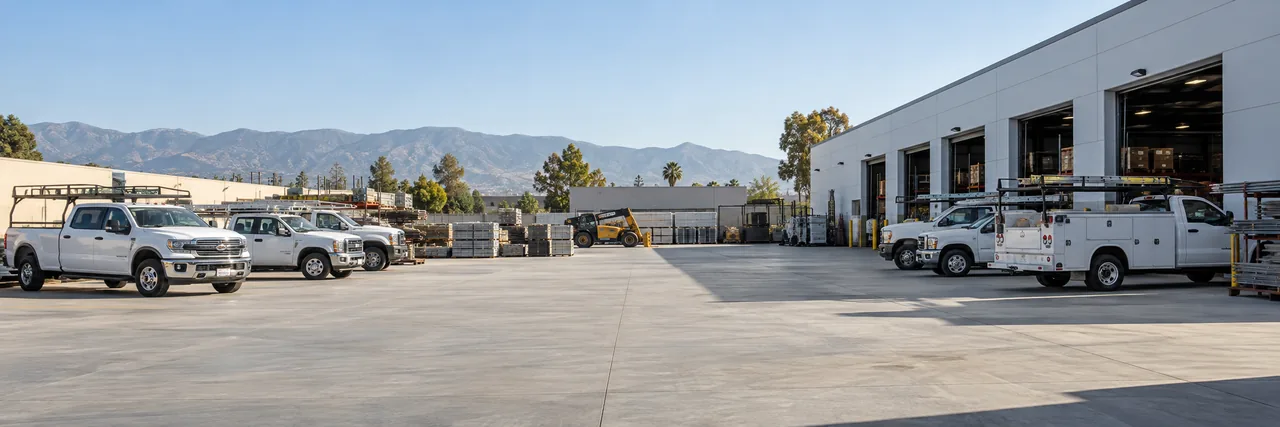
Fleets in this range often run from more than one place: a main yard, a satellite shop in a neighboring county and a dozen vehicles that go home with employees every night. Each unit is typically rated at the address where it sleeps, so accurate garaging ZIPs matter even more here than at smaller sizes.
When a second location opens, tell the carrier before trucks start parking there. Moving six vans from an Inland Empire yard to a new shop in Orange County can change how they're rated, and leaving the old address on the schedule tends to invite questions after a claim. The same goes for take-home rules: whether personal use is allowed, who else may drive and whether vans sit locked on the street or in a garage.
At this size, a safety program often becomes something an underwriter can evaluate rather than take on faith. The pieces are familiar: a written vehicle use policy, MVR review, accident reporting and some way to see how trucks are driven. What usually separates one fleet from another is whether anyone acts on what those pieces show.
Video is a good example. In a 2010 FMCSA study run with the Virginia Tech Transportation Institute, onboard video monitoring combined with driver coaching cut recorded safety-related events by 38.1% and 52.2% at the two carriers studied. The study counted risky driving events rather than crashes, and the coaching was part of the result; cameras nobody reviews are unlikely to produce it.
Underwriters often ask how footage gets used: whether a supervisor looks at flagged events, whether drivers are coached and how long video is kept after an incident. Our guide to fleet safety measures underwriters often credit covers those choices.
Official sources
Reviews of Gleason Insurance Brokers, LLC, the licensed agency behind this site.
91 Enterprise LLC
March 24, 2026
We are using Gleason insurance for our commercial auto policy and GL policy. David is the best insurance broker I've worked with — very honest, responsive, and knowledgeable. Highly recommend.
Fito Plumbers
February 20, 2026
We have been working with David at Gleason Insurance Brokers for 8+ years. David always goes above and beyond to make sure we have the appropriate coverages. He explains everything in detail and makes sure we feel confident and understand all of our policies. He is always available and responds right away!
Barry Stay
February 17, 2026
David provides great service and I highly recommend him for your insurance needs.
Victor Alvarez
February 11, 2026
Great customer service!! Highly recommend it.
Marissa Martinez
February 6, 2026
The best insurance broker in California. Construction insurance requirements are constantly changing, and if it weren't for David, it would be impossible to keep up. He is friendly, knowledgeable, and ready to tackle all of our issues. Definitely recommend Gleason Insurance Brokers.
Wing Sze Lam
August 26, 2025
The associate delivered outstanding and professional service.
Miguel Sanchez Nunez
August 18, 2025
I'm really glad I worked with David to find commercial auto insurance. He made the process quick and easy, and most importantly, he helped me find a policy that fits my business needs and my budget. If you're a business owner looking for reliable and affordable commercial auto insurance, I highly recommend reaching out to David.
Reviews reflect individual client experiences and are not a guarantee of coverage, pricing or results.
Fleets this size are common among service companies with a dispatcher and a full calendar, contractors running several crews at once and suppliers with set delivery routes. Schedules usually mix many light units with a few heavier ones: a plumbing company with eighteen vans and two jetter trucks, an electrical contractor with service vans and a bucket truck, a grading outfit with pickups, dump trucks and equipment trailers or a distributor running box trucks and flatbeds.
Each body type tends to bring its own underwriting questions. A boom raises one set, and a box full of customers' orders raises another; our pages on bucket truck insurance and insurance for business box trucks go through both.
Trade pages go further still. See electrician van insurance, grading and excavation fleet insurance or supplier delivery truck insurance for how those fleets are usually written.
Bigger customers tend to bring bigger insurance requirements. A municipal contract or a large property management account will often spell out a $1 million combined single limit for auto, additional insured status and a waiver of subrogation, which is why that limit is where we begin. Lower limits of $300,000, $500,000 and $750,000 generally remain available, but a growing fleet should check every active contract before choosing one.
Newer, financed trucks are also more common at this size, and lenders usually require comprehensive and collision on them. Our page on commercial truck physical damage insurance explains the choices, and the one on commercial auto liability limits covers how a single limit generally applies to a crash.
A fleet of fifteen or twenty vehicles shouldn't go to market in the last week before renewal. Underwriters usually need an updated vehicle and driver list, current loss runs and time for follow-up questions, and rushed submissions tend to draw fewer quotes.
Then get a fleet insurance quote with the updated lists, and we'll take one submission to the national carriers that write your trade.
Some do. A loss control visit, or a phone review of how you hire drivers and maintain vehicles, is common for growing fleets, especially with heavier units on the schedule.
A written standard that hiring managers work around can be worse than none once it turns up in a claim file. Apply it the same way every time.
One rough year with a clear fix, such as cameras added or a driver let go, usually reads very differently from an unexplained run of claims.
When a truck's real overnight address differs from the schedule, the carrier may question how it was rated after a loss. Keep ZIPs current.
One policy and a written driver rule for a small fleet.
Fleet insurance for 5 to 10 vehiclesThe next step: safety programs and a claims process.
Fleet insurance for 26 to 50 vehiclesSingle trucks and small business auto in 25 trades.
Business auto insurance for 1 to 4 vehiclesTiming depends on the carriers and your loss history.
Have ready: vehicle list with VINs, driver list, current declarations page, loss runs.
Next Level Experience. Insurance Done Right.
Fleet quotes for California businesses running up to 50 trucks and vans.