Cargo vanGVWR
- Weight
- Up to 10,000 lbs typical
- CDL
- No
- Trades
- HVAC, alarm, painting, flooring

Commercial auto for electrical contractors running cargo vans, service-body trucks and the occasional bucket truck, with wire, conduit and ladders on board. Quoted for up to 50 vehicles, through top-rated national carriers.
Quick answer
Electrical contractors usually need every van, service body and bucket truck on a single commercial auto policy, with each driver listed and take-home vans scheduled where they park. Work done from a raised bucket is typically general liability, not auto. We price electrical fleets from a $1 million combined single limit, the floor most general contractors set.
Commercial Auto + Fleet Insurance
CaliforniaUp to 50 VehiclesWe’re here to help.
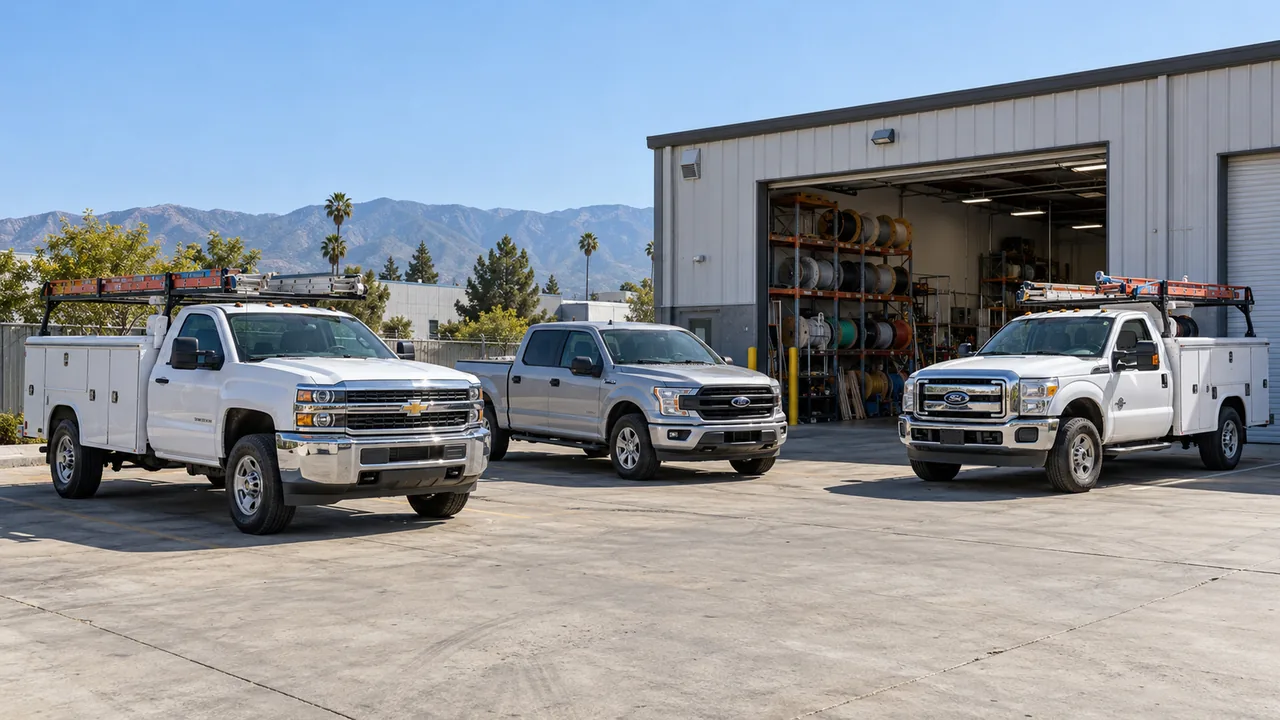
Most electrical contractors insure a mix of three body styles under one commercial auto insurance quote. Service electricians mostly drive cargo vans and utility-body trucks set up for the work: conduit and strut on the rack, a bender clipped to the side, spools of wire on a dispenser bar and labeled bins of breakers, boxes and fittings. Construction electricians lean on crew-cab pickups and service bodies, and a foreman on a commercial site may park a wire-reel trailer or a gang box there for the length of the job. Our pages on insurance for work vans and insurance for service trucks cover each body style.
Bucket trucks come out when the work goes up: parking-lot poles, building-mounted signs, overhead service drops and high-bay fixtures in older warehouses. A bucket truck is heavier and rarer than the rest of the fleet, and carriers tend to treat it as its own risk, asking who is trained to run the boom and how often the unit is inspected. Some electricians rent one for the few jobs that need it instead of owning; aerial lift truck insurance explains how an owned unit is written.
Long material is the loading habit to watch. Ten- and twenty-foot sticks of conduit hanging off a rack or out the back of a pickup need a flag and tight straps, and a stick that slides at a hard stop can go through the windshield behind you. Caltrans' overhang guidance puts a number on the flag: The state's flag-and-light rule generally applies once a load reaches four feet or more beyond the rear. Copper is the other habit: Spools left in a van overnight draw break-ins, and while the punched lock and broken glass are usually a comprehensive claim on the van, the wire itself falls outside auto. Vans and most service bodies stay under 26,001 lbs GVWR, so a commercial license usually isn't needed; for a bucket truck, it depends on the unit.
Official sources
An electrical fleet's road exposure is spread over many short trips: supply-house runs, service calls, inspections and moves between sites. Most crashes are low-speed, but a service body full of conduit and wire is heavy for its size, and an injury claim from a simple intersection crash can outgrow a small limit. Service vans also spend a lot of time at the curb in commercial districts, where a door swung into a bike lane or conduit unloaded across a sidewalk can injure someone who never saw the van. Liability coverage is generally where that's paid. A $1 million combined single limit is our starting point for electricians, since general contractors, school districts and commercial landlords typically require it.
Physical damage is the part of the policy that answers for your own vehicles, typically after a collision, theft, fire or vandalism. Bucket trucks should be scheduled at full value with the aerial unit installed, and vans with shelving, racks and an inverter should carry the upfit in their value. Collision and comprehensive for company trucks explains deductibles and how values are set.
Two more coverages help close gaps around the fleet. Uninsured motorist coverage for business vehicles can protect your electricians when the driver who hits them carries no insurance or too little. Hired and non-owned auto is designed to cover the company when estimators and project managers drive their own cars between job walks and when a rented bucket truck stands in for the one you don't own.
Electrical subcontracts on commercial jobs usually spell out the auto limit, and a $1 million combined single limit is the usual floor. The same insurance exhibit often asks for additional insured status, primary and noncontributory wording and a waiver of subrogation, each an endorsement we request for the carrier to review. A residential service electrician without contracts like that can carry $300,000, $500,000 or $750,000.
Public works, school and hospital jobs tend to come with stricter certificate language and closer review. Send us the insurance section of the contract before you bid, so we can work on matching the policy to it before the award comes through rather than on your first day on site. Solar and EV charger installs often arrive through developers or installers with insurance exhibits of their own, and those usually ask for the same endorsements a general contractor does. That work sits inside the trade's license: CSLB's C-10 Electrical classification reaches solar photovoltaic cells along with wires, fixtures, raceways and conduit. Keep each signed exhibit with your vehicle list; at renewal, it shows us which limits your contracts still call for.
A bucket truck or heavy service body may need California's Motor Carrier Permit depending on its rating and use; the MCP 65 insurance filing guide explains it.
Official sources
Theft history gets a look too. Several break-in claims in a row can tell an underwriter that vans are parked somewhere exposed with copper inside, and a plan to change that, such as unloading vans at night or parking in a lit yard, helps. So does a rule that a driver who picks up a moving violation in the bucket truck parks it until a supervisor has reviewed the record. Cameras and GPS tracking count as well; our fleet safety and claims defense page explains what each can do in a claim.
A licensed electrician with one van is an easy account to describe, and the owner's own driving record usually carries it. Small business auto insurance covers how carriers handle that size.
At five to ten vehicles, an electrical contractor usually has a service side and a construction side, and the vehicles do different work. A van running a string of service calls drives differently from a pickup parked at one site for a month, so we describe each group to the carrier rather than averaging them. A 5 to 10 vehicle fleet is where that starts to matter.
From 11 to 50, bucket trucks, reel trailers and take-home vans all benefit from written rules, and the safety program often becomes the main way to move the price. Adding vehicles mid-term is routine; send the VIN and value before the truck goes to work. A contractor that lands a large project often adds a few pickups for a year or so; tell us whether they're bought, leased or rented, because each can be handled a little differently on the policy. If you're planning to grow past 25, fleet insurance for 26 to 50 trucks shows what carriers look for.
For an electrical contractor, a bucket truck is both a vehicle and a piece of lifting equipment. On the road, it's usually rated like a heavy service truck with extra weight carried high. At the job, with outriggers down and an electrician in the basket, the risk moves off the road, and many auto policies exclude injury or damage caused by operating that kind of equipment. That's why the work aloft is usually handled under general liability and why the two policies should be read together.
On the road, the bucket truck's risks are height and setup. A boom that isn't fully cradled can strike an overpass, a tree limb or a drive-through canopy, and an outrigger left partly down can catch a curb or a passing car. A walk-around before the truck moves and a rule that only trained operators run the unit are what underwriters usually want to hear about. Cal/OSHA's aerial device rules point the same way: They generally limit operation to authorized persons and call for checking that the boom is properly cradled, with outriggers stowed, before the truck travels. Know the truck's travel height, post it on the dash and steer clear of low underpasses and tight tree canopies on the way to the job. If you rent a bucket truck instead, read the rental agreement before the first job; it usually decides who pays for damage to the truck, and whether your policy includes hired auto physical damage shapes what's left for you.
Official sources
The broken window and punched lock are typically a comprehensive claim on the van. The wire and parts taken usually fall outside auto and call for equipment coverage.
Conduit sticking past the bumper without a flag or tight strap can be an easy at-fault claim. Strap it, flag it and recheck it at every stop.
Commercial and public jobs often reject a certificate over wording, not limits. Sending us the insurance exhibit early helps keep a bid from stalling on paperwork.
Separating service vans from construction pickups on the application lets the underwriter rate each group for how it's really used.
Low-voltage vans with ladders and lots of stops.
Commercial auto for alarm and securitySpray rigs on pickups, with product to account for.
Commercial auto for pest controlCrane-body trucks working on customers' machines.
Commercial auto for equipment repairTiming depends on the carriers and your loss history.
Have ready: vehicle list with VINs, driver list, current declarations page, loss runs.
Next Level Experience. Insurance Done Right.
Fleet quotes for California businesses running up to 50 trucks and vans.