FlatbedGVWR
- Weight
- 10,001–33,000 lbs typical
- CDL
- Over 26,000 only
- Trades
- Framers, drywall, fence, roofing

Commercial auto for fence companies hauling posts, rails, panels, chain link and concrete on flatbeds, pickups and trailers, with an auger along for the ride. One truck or a full install fleet, quoted with top-rated national carriers.
Quick answer
Fence installers usually need a commercial auto policy listing every flatbed, pickup and trailer, with liability that can respond when a long load shifts or comes off. The materials on the truck, the auger and the skid steer typically sit outside auto coverage. Our fence quotes are priced first at a $1 million combined single limit.
Commercial Auto + Fleet Insurance
CaliforniaUp to 50 VehiclesWe’re here to help.
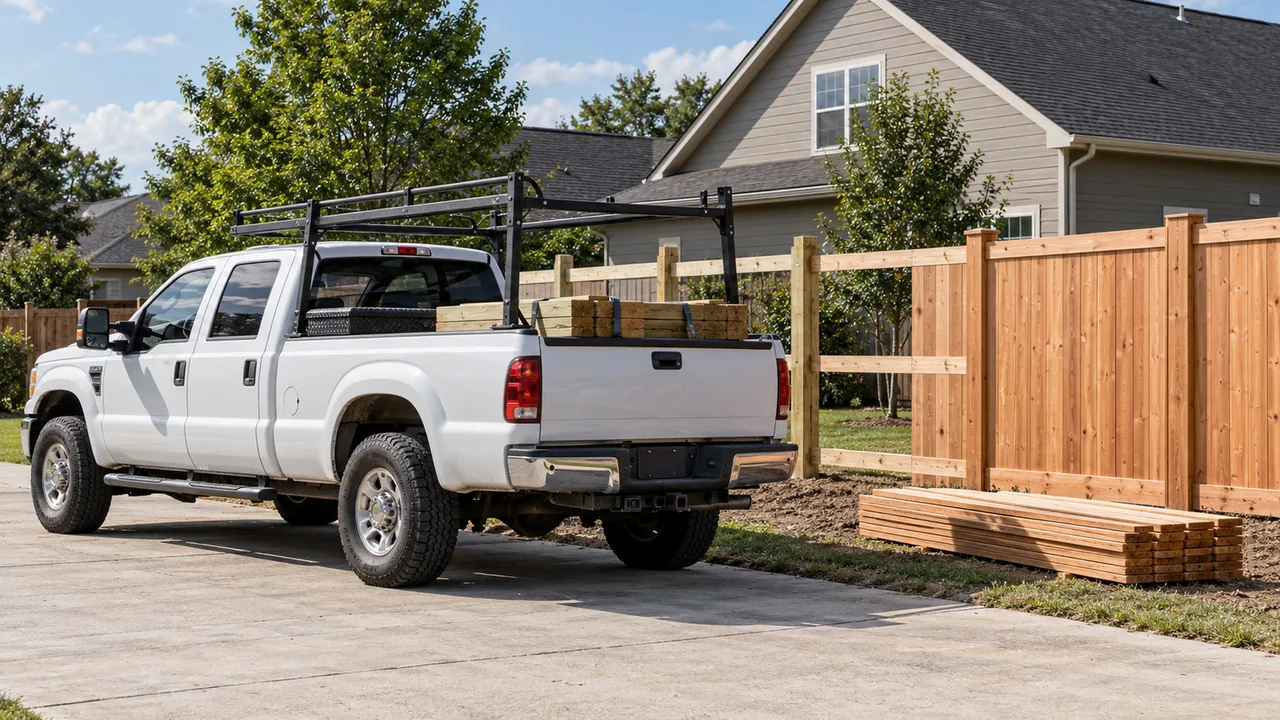
Fence companies haul long, heavy and awkward loads. The install truck is usually a flatbed or stake bed on a 1-ton or Class 4–5 chassis, with a headache rack and often an overhead pipe rack for the long top rail and line posts that chain link needs. Wood crews stack posts, rails and pickets; vinyl and ornamental iron crews carry built panels and gates; nearly everyone carries bags of concrete, a mixing tub and a post-hole auger. Ornamental shops often add a small welding setup of their own for hanging gates and making repairs on site, and ranch and ag fence crews in the Valley and the High Desert haul T-posts, field fence and barbed wire out over unpaved ranch roads. CSLB licenses this work under its C-13 fencing classification, which, as CSLB describes it, reaches gates, guard rails, barriers, backstops and flagpoles as well as fences, though not masonry walls.
Pickups handle estimates, run materials and pull trailers. A tandem-axle equipment trailer moves a skid steer or mini skid steer with an auger attachment, and a dump trailer hauls away old fence, broken footings and spoil from the holes. Temporary-fence crews follow a different pattern: repeated trips to construction sites with panels, stands and sandbags, often several sites a day. Insurance for contractor flatbeds covers the install trucks.
Most of these units are two-axle trucks under 26,001 lbs GVWR, so crews can generally drive on regular licenses unless a trailer rated over 10,000 lbs goes behind one. Payload is usually the number that matters: A flatbed carrying a pallet of concrete bags, steel posts and a load of rail is often closer to its rating than the driver assumes, and an overloaded truck brakes, steers and wears tires differently. Many underwriters ask for GVWR and a typical load for that reason.
Official sources
The claim fence companies fear most is a load that leaves the truck. A strap that slips, posts that slide forward under hard braking or a roll of chain-link fabric that comes loose on the freeway can strike another vehicle at speed, and the injuries can be serious. Liability is the core coverage; production builders, general contractors and public agencies usually list a $1 million combined single limit among their certificate terms, which is why that figure anchors our fence quotes.
Overhang creates a second kind of claim. Rail and posts that hang past the bed can catch a car in a parking lot, a pedestrian on a sidewalk or a gatepost while the driver turns into a tight driveway. Those are usually auto liability claims too, and they're why many carriers ask how long loads are flagged and routed; commercial vehicle insurance in California explains how a business policy is put together.
Physical damage insurance for work trucks can cover the truck and trailer, including a flatbed body and racks built onto the chassis, when they're scheduled at full value. Trailers need their own line on the policy: A skid-steer trailer stolen from a job site overnight generally isn't covered unless it's listed. Equipment trailer insurance goes into the details.
Official sources
Expect to carry a $1 million combined single limit. Production builders, general contractors and public agencies building school, park and highway fencing commonly want to see it, usually alongside a waiver of subrogation, primary wording and additional insured status, and a builder's superintendent may keep your crew out of the subdivision until the certificate is on file.
A residential fence company whose customers are mostly homeowners can look at lower limits of $300,000, $500,000 or $750,000. The trade-off tends to show up the first time a builder or HOA asks for a certificate, so many fence companies carry the million from the beginning rather than change it mid-term. A company working for several builders at once may also be juggling several versions of certificate wording; keep each builder's requirements on file and send them with the renewal so each certificate can be checked against its subcontract. Public works fencing for schools, parks and highways often arrives with a thick contract packet covering bonds and payroll as well; the auto requirements are usually buried in the same document, so send us the whole thing.
Heavier flatbeds and trucks towing loaded equipment trailers can need a Motor Carrier Permit; California Motor Carrier Permit insurance filing explains the DMV filing when they do. Load securement rules generally apply to trucks carrying materials on public roads, and a load that comes loose can add a citation to the claim.
Age and experience matter here in a particular way: The newest hire is often the one sent alone in the pickup for a forgotten box of hardware or another pallet of concrete, so driver rules should cover errands, not only install days. A written loading routine can help too. Fence companies that train crews to strap, flag and check the load before leaving the yard, then again after the first few miles, have a real answer when the underwriter asks how they prevent load losses. Temporary-fence work often draws its own questions, because those trucks make many short trips into active construction sites and spend much of the day backing among other trades' vehicles and equipment. Fleet safety controls carriers credit go further, including cameras.
A one-truck fence installer, usually the owner with a pickup and trailer or a single flatbed, is typically quoted on the owner's driving record, the truck's value and what it hauls. Say whether the trailer carries a skid steer, since a loaded equipment trailer behind a pickup tends to get a closer look than a light utility trailer. A personal pickup used for estimates and jobs generally still belongs on a commercial policy; a one- to four-truck business auto policy is where many fence companies start.
At five to ten trucks, a fence company typically runs a couple of install crews, a temporary-fence crew and an estimator, with trailers for the skid steer and the dump. Carriers usually treat that as a fleet and rate the drivers as a group, so a rule about who may drive and who may tow carries real weight; a small fence fleet's policy is built around that rule.
Past ten, usually builders' fence contractors working several subdivisions at once, the account tends to turn on loss trends, driver turnover and how well crews secure loads. List every trailer, note which yard each truck works from and tell us before a new flatbed goes into service so it can be added before its first load. Builder work also swings with the housing calendar, with extra crews out when subdivisions close out, so let us know when you add trucks for a busy stretch.
Every fence material moves differently. Bundled steel tube rolls when a strap loosens; wood posts slide forward under hard braking; vinyl panels catch wind like a sail; chain-link rolls bounce. Cross-strap long material, chain or bind steel bundles, keep panels low and tied flat and make sure a headache rack separates the load from the cab. Crews often pad ornamental panels and gates so they don't scratch or bend, and the padding has a second benefit: It helps keep finished steel from sliding against itself. Temporary fence panels stack high on a flatbed, catch the wind and shed stands and clamps when a strap is missed, so they need the same care as permanent material.
Overhang needs a flag and a plan. Material hanging past the tailgate or the end of the deck should be marked, and the driver should know a route that avoids sharp turns into tight driveways. Vehicle Code section 24604 generally sets the floor for a load reaching four feet or more past the rear: a solid red or fluorescent orange flag at its end by day and two red lights there after dark. Concrete bags belong over or ahead of the axle, not stacked at the back of a pickup bed where they lift weight off the front wheels.
Check the load after the first few miles and again after any rough road. Straps settle, bundles shift and a load that was tight in the yard can be loose by the on-ramp. Trucks that go home loaded overnight need the same check in the morning before they pull out. A quick stop costs far less time than a lost-load claim.
Official sources
Usually not by auto insurance. Posts, panels and concrete in transit belong on an equipment or installation policy, while auto generally responds to the damage a lost load does to others.
A skid-steer trailer that isn't listed typically has no theft or collision coverage. Add every trailer, including the old one behind the shop.
Production builders often hold a fence crew back until the auto certificate matches the subcontract. Get us the builder's requirements early.
When a car runs into the end of a long load, a flag and a light on the overhang can help show the driver did it right.
Timing depends on the carriers and your loss history.
Have ready: vehicle list with VINs, driver list, current declarations page, loss runs.
Next Level Experience. Insurance Done Right.
Fleet quotes for California businesses running up to 50 trucks and vans.