Cargo vanGVWR
- Weight
- Up to 10,000 lbs typical
- CDL
- No
- Trades
- HVAC, alarm, painting, flooring

Auto coverage for security system and low-voltage installers whose ladder-rack vans make a string of short stops every day. One van or up to 50 vehicles, quoted with top-rated national carriers.
Quick answer
Alarm and security installers usually need one commercial auto policy for every van and pickup, with techs listed as drivers and take-home vans scheduled where they park. Short in-town trips tend to bring parking and backing claims, and hired and non-owned coverage is the usual answer for sales reps in their own cars. Alarm quotes are built from a $1 million combined single limit.
Commercial Auto + Fleet Insurance
CaliforniaUp to 50 VehiclesWe’re here to help.
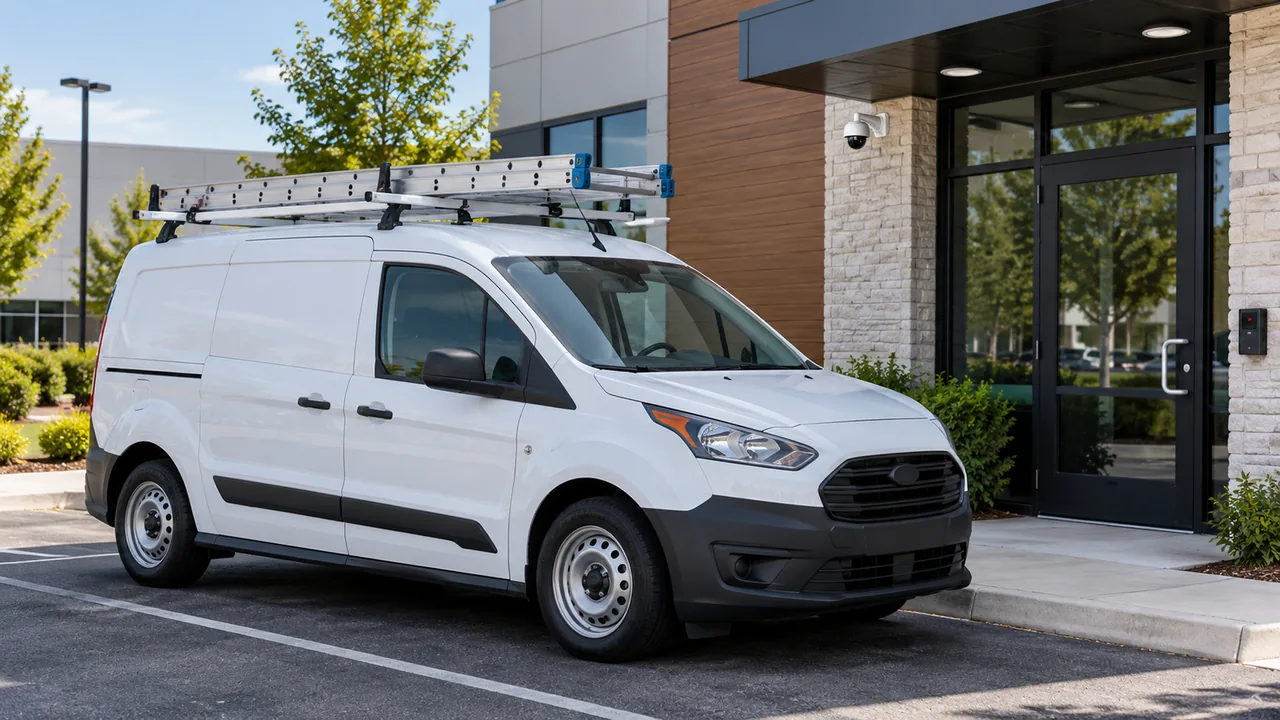
Security and low-voltage installers drive light vehicles: compact and mid-size cargo vans, a few high-roofs and pickups with a shell for the lead tech. Each carries an extension ladder and a stepladder on the rack, a cabinet of cable spools and bins of panels, keypads, cameras, sensors and connectors, plus a drill kit and fish tapes for running wire through finished walls. Camera and communication wiring of that kind falls under CSLB's C-7 Low Voltage Systems classification, which covers energy-limited systems but leaves low-voltage fire alarm systems out. Nothing on board is heavy by truck standards, and an alarm fleet rarely gets near the 26,001-lb GVWR mark where a commercial license would come in. See commercial van insurance in California and contractor pickup insurance for those vehicles.
What sets alarm work apart is the number of stops. An install crew may spend a day or two at one commercial building, but a service tech can visit several homes and businesses before lunch, each with a new driveway, a new curb and a new set of parked cars. Most of those stops are on residential streets and in tight retail lots. The claims that follow are rarely dramatic: backing into a mailbox, swinging a door open into a passing car, clipping a bumper while reading house numbers instead of watching the road.
Height is the other thing to watch. A van with a ladder on top is taller than a new driver expects, and camera installs often happen inside the customer's own parking structure, where the entrance bar was set for cars. Drive-through lanes, low carports and older loading docks catch racks too. A clearance sticker on the dash and a habit of checking the posted height before pulling in prevent many of these.
Official sources
An alarm company's commercial auto insurance in California turns mostly on liability, because the vans spend so much of the day maneuvering around other people's property. Most claims are small, but a tech who backs into a pedestrian in a busy lot or opens a door into a cyclist creates a bodily injury claim that can grow quickly. Commercial customers, property managers and the general contractors who bring in low-voltage subs usually expect a $1 million combined single limit, so an alarm quote opens there. Auto liability insurance explains how the limit works.
Physical damage generally pays for your own vans after a collision, theft or vandalism. Repairs on light vans usually cost less than on heavy trucks, so some alarm companies carry collision only on newer or financed units and comprehensive across the whole fleet. Comprehensive tends to matter more than owners expect, because a van parked overnight at a tech's house with cameras and panels visible through the glass invites a break-in. We can quote it either way so you can compare. Physical damage insurance covers the details.
Hired and non-owned auto carries extra weight for many security companies. Sales consultants drive their own cars to in-home appointments, site surveyors walk buildings before a bid, and office staff run parts out to a tech who's short a sensor. If one of them causes a crash on company business, the injured party can name your company, and hired and non-owned auto coverage is what typically answers for the business.
Alarm companies that install for commercial buildings, schools, banks and property managers usually see a $1 million auto limit written into the service or installation agreement. Residential install shops without those contracts can look at $300,000, $500,000 or $750,000. Many choose to match whatever their largest commercial prospect will ask for, so a new contract doesn't force a midyear policy change.
Commercial jobs often want additional insured status on the certificate, and national accounts and integrators sometimes add a waiver of subrogation and primary wording. Each is usually added by endorsement, and having them in place before a big install starts helps avoid a delay on the first day. School districts and public agencies may also ask for proof of auto coverage before your vans can work on a campus, and some keep a list of the vehicles allowed on site. Keep the vehicle schedule current so the certificate matches the vans that actually show up.
Light vans and pickups rarely run into California's Motor Carrier Permit rules, and the state's truck insurance requirements cover the exceptions if you ever add something heavier.
Alarm companies already sell monitoring; telematics is the same idea pointed at the vans. GPS data showing speed, hard braking and time at each stop can give an underwriter a reason to credit the account, and dash camera footage helps when a parked-car claim turns into an argument. A short backing rule, such as backing into driveways on arrival so the van pulls out forward, is the kind of habit an underwriter likes to see in writing. Our page on dashcams and telematics explains what each control can do when a claim comes in.
An owner-installer with one van usually fills out a short application. If a spouse or grown child ever drives that van, list them; an unlisted household driver can turn a simple claim into a dispute. Coverage for a one-van operation explains how carriers approach that size.
From five to ten vans, an alarm company is usually a mix of install and service techs, a few take-home vans and a small office. That's a fleet to most carriers, and a written driver policy plus yearly MVR checks helps make it easier to place. Insurance for a small fleet goes through what changes.
At 11 to 50, many security companies run install crews, service techs and sales staff across several counties, and each group drives in its own way. We present them separately on the submission rather than as one blended fleet. Vans added mid-term go on by endorsement before they take their first call. Security companies that buy another dealer's accounts often inherit vans and techs in the same deal; send us both lists before closing so they can be added before the handover rather than after. Insurance for a growing fleet covers the middle of that range.
Some alarm companies do more than install. They answer service calls after hours when a system won't arm, send a tech to reset a panel after a false alarm or run marked vehicles that check on a property before police arrive. That's a different kind of driving from a scheduled install: often at night, often in a hurry and sometimes toward a situation nobody has assessed yet.
Carriers often rate response and patrol driving separately, and some won't put it on the same policy as install vans at all. Tell us up front which vehicles do it, how often and who drives them, so the quote can reflect the whole operation. A patrol car tucked quietly into an install schedule tends to surface at the worst moment, after a nighttime crash, when the carrier starts asking what the vehicle was doing.
Plenty of alarm dealers contract response out to a patrol company instead. If you do, ask that company for its own auto certificate and keep it on file; your policy shouldn't end up answering for drivers you don't employ. And if your own techs handle after-hours resets, make sure the on-call tech is someone the carrier already has on the driver list.
Usually not when the reps own them. Their personal policies are generally first in line, with hired and non-owned coverage behind the company.
Techs who know a van's height still forget the ladder on top. A clearance sticker on the dash helps prevent parking-garage strikes.
Alarm fleets tend to see parking and backing claims more than large crashes. Backup cameras, a pull-through parking habit and a walk around the van before leaving each driveway help keep those claims off the loss runs.
A vehicle used for alarm response drives differently from an install van. Listing it honestly helps avoid a coverage fight later.
Timing depends on the carriers and your loss history.
Have ready: vehicle list with VINs, driver list, current declarations page, loss runs.
Next Level Experience. Insurance Done Right.
Fleet quotes for California businesses running up to 50 trucks and vans.