Work pickupGVWR
- Weight
- Up to 14,000 lbs typical
- CDL
- No
- Trades
- Every trade

Commercial auto for pest control companies running route pickups, service trucks and spray rigs with product on board. One truck or up to 50 vehicles, with options from top-rated national carriers.
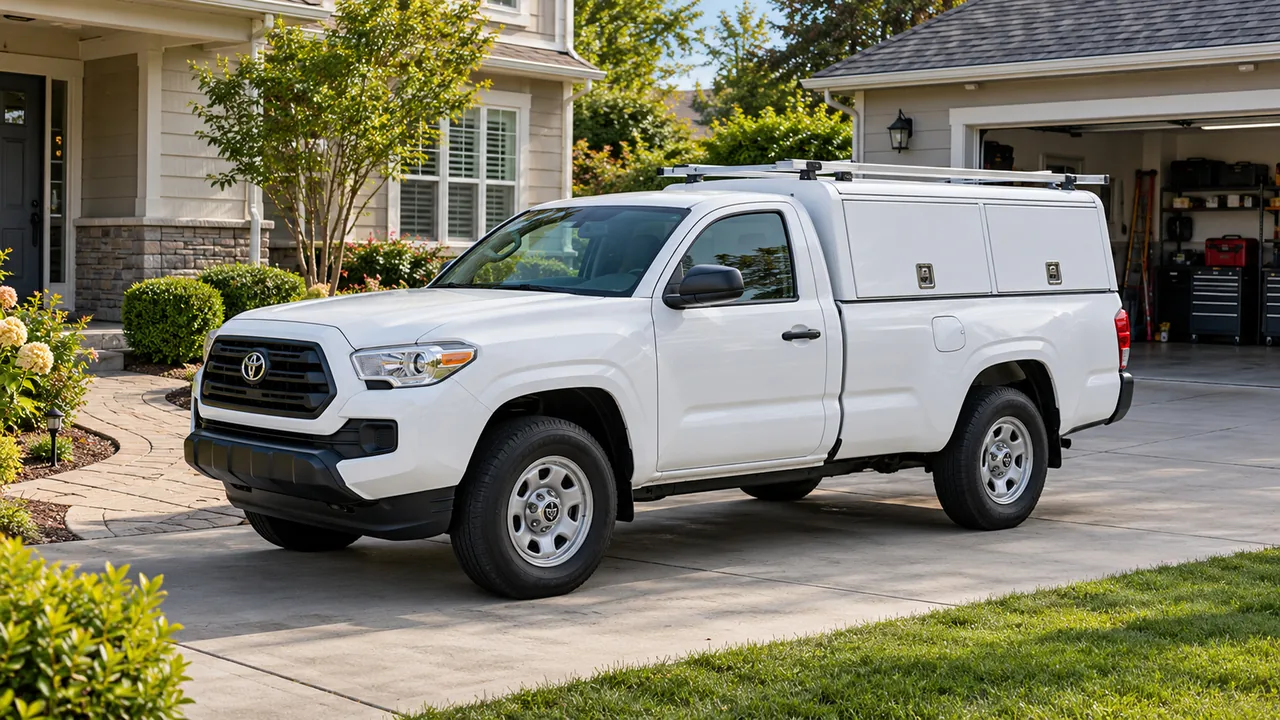
Quick answer
A California pest control company usually needs every route pickup and service truck on one commercial auto policy, with the spray rigs and the product they carry described to the underwriter. Spills and drift are usually pollution and general liability questions, not auto. Our pest control quotes use a $1 million combined single limit as the baseline.
Commercial Auto + Fleet Insurance
CaliforniaUp to 50 VehiclesWe’re here to help.
Most pest control routes run on compact and full-size pickups with a spray rig in the bed: a poly tank, a pump and a hose reel, often on a skid so the whole unit can come out for service. Other companies use small utility-body trucks with locking compartments for product, bait stations, dusters and backpack sprayers. Termite companies add trucks for drilling and treating slabs, and fumigation crews haul heavy tarps, sand snakes and fumigant cylinders in larger trucks. Commercial pickup truck insurance and service body truck insurance cover the vehicles in more depth.
A full tank changes how a pickup drives. Liquid is heavy, and it moves, so a truck with a sloshing tank stops longer and leans harder in a turn than the same truck empty, and a skid that isn't bolted down can slide forward in a panic stop. Technicians who came from passenger cars should hear that before their first route, along with the habit of braking early and taking corners slowly with a full load. Termite crews add drills, foam units and injection equipment to the bed, which means more weight and more loose items that need a place to be strapped.
Routes are dense. A residential tech works through a long list of houses on a quarterly schedule, and a commercial tech services restaurants, warehouses and apartment complexes on set days. That means lots of parking, backing and stepping out of the truck on busy streets. Many pest techs take their trucks home so the route can start near their house, which puts both the truck and the product in a residential driveway overnight.
The product on the truck is what makes a pest control account different, and an underwriter will likely ask about it before quoting. Typical questions cover what you carry, how much, how it's stored and locked and whether drivers carry a spill kit and know how to use it. California sets its own rules for carrying and storing pesticides in a vehicle, and our California truck insurance requirements guide points to where they're found. The Department of Pesticide Regulation's safety leaflet on moving product is plain about the basics: Product shouldn't ride in the cab or share a compartment with food, clothing or people, and containers should be secured upright so turns and sudden stops can't tip them.
Liability generally pays for injuries and damage your drivers cause, plus your defense, and property managers, restaurant groups and other commercial accounts commonly require a $1 million combined single limit. A crash involving a truck with product on board can bring extra complications at the scene, which is one more reason to carry a limit your contracts will accept. Route trucks also stop and start all day on streets with children, dogs and parked cars, which is where many low-speed backing claims begin. Our commercial auto liability page explains how the limit is structured.
Physical damage coverage for trucks typically repairs or replaces the vehicles, and a permanently mounted spray rig can be counted in the truck's value if it's listed. Route managers and inspectors who drive their own cars to look at a termite job or meet a new commercial client should have hired and non-owned coverage behind them, because the company is often the party a lawyer looks to after a crash.
A $1 million combined single limit is our starting point for pest control fleets, since service contracts with restaurants, hospitals, schools and property managers usually require it. Route companies that serve only homeowners can choose $300,000, $500,000 or $750,000, but a lower limit leaves less room if a crash with product on board turns into a larger claim. Contracts with food processors and warehouses can be especially particular about certificate wording, so send the insurance exhibit along with your vehicle list.
Commercial accounts often ask to be named additional insured on your auto policy, and national restaurant and retail chains may also want a waiver of subrogation. Requesting those endorsements from the carrier early helps certificates be ready when a new account signs, rather than holding up the first service visit. Termite inspections tied to home sales add another wrinkle: Escrow deadlines tend to be firm, and a property manager or listing agent may want proof of coverage before your inspector arrives. Where a carrier offers one, a blanket additional insured endorsement can keep that request from becoming a bottleneck.
Whether a heavier fumigation truck needs a Motor Carrier Permit depends on its weight and use; the MC 65 M filing guide explains it.
Pest control owners who can show locked compartments, spill training and a record of what each truck carries give the underwriter a much clearer picture than a vehicle list alone. A one-page product and spill procedure kept in every cab can answer several of these questions at once. For the licensing question, note which board licensed each tech: California's Structural Pest Control Board generally licenses people applying pesticides to pests invading structures, while the Department of Pesticide Regulation handles licenses for non-structural work. Cameras and GPS help the same way they do for any route fleet; how cameras and telematics defend a claim explains what they can do when a crash is contested.
A licensed operator running one truck can expect the same product questions a larger fleet gets, scaled down to one rig, and the account is written as business auto insurance like any other trade's. Business auto insurance for 1 to 4 vehicles explains that size.
At five to ten trucks, most pest control companies have a route structure, a few take-home trucks and a storage room or yard where product is kept. The underwriter typically reads the fleet as a whole and wants the same rules on each truck, from how tanks are secured to who may drive. Fleet insurance for 5 to 10 trucks covers that stage.
From 11 to 50, pest control companies often run separate general pest, termite and fumigation divisions with different trucks and different products. Each division should be described on its own so the quote reflects what each truck really carries. New trucks are added by endorsement before their first route. Warm months bring ant calls and termite swarms, and some companies put an extra truck or two on the road just for the season; those belong on the schedule for the months they run, not borrowed from someone's driveway. Fleet insurance for 26 to 50 vehicles covers the larger end.
Take-home trucks are convenient when a route starts near a technician's house, but they leave product in a residential driveway every night. Locked compartments, a rule that tanks are secured at the end of the day and a written record of what's on each truck usually answer most of what an underwriter wants to know. Some companies require techs to return product to the shop on Fridays so trucks don't sit loaded all weekend.
Theft is the other worry. A pickup stolen with a full rig and locked boxes of product is a problem beyond the truck itself, and authorities may want to know exactly what was on board. Keep an inventory by truck, store a copy somewhere other than the truck and update it when techs restock. If the worst happens, you can answer from records rather than guess.
Where product gets mixed matters too. Some companies mix at the shop so trucks leave with a ready tank, while others carry concentrate and mix on site. Underwriters often ask which, because a crash with concentrate in the bed is a different event from one with a diluted tank, and the answer can say a lot about how carefully the operation is run.
Many do. They'll usually want to know what's on board, how it's stored and who handles it before they quote, so send a product list along with the vehicle schedule.
A skid that only sits in the bed can slide forward in a hard stop, straight toward the cab. Bolt it down and tell the underwriter it's secured.
General pest, termite and fumigation trucks carry different loads. Presenting them separately helps keep one division's risk from coloring the whole account.
Damage from the collision typically goes to the auto policy. Cleanup of what spills from the tank usually falls under pollution coverage, so know where that line sits.
Crane bodies and customers' machines on board.
Commercial auto for equipment repairTake-home vans with refrigerant questions of their own.
Commercial auto for hvacTiming depends on the carriers and your loss history.
Have ready: vehicle list with VINs, driver list, current declarations page, loss runs.
Next Level Experience. Insurance Done Right.
Fleet quotes for California businesses running up to 50 trucks and vans.