Cargo vanGVWR
- Weight
- Up to 10,000 lbs typical
- CDL
- No
- Trades
- HVAC, alarm, painting, flooring

Auto coverage for painting companies whose vans and pickups haul ladders, sprayers and the crew to every job. One van or up to 50 vehicles, quoted with top-rated national carriers.
Quick answer
A painting company's vans and pickups usually belong on one commercial auto policy that names each vehicle and driver, including crew leads who keep a van overnight. Injuries to painters riding along typically go to workers' comp and overspray to general liability, which leaves the auto policy mostly about the road. HOAs and property managers often ask for a $1 million combined single limit, which is where our painting quotes begin.
Commercial Auto + Fleet Insurance
CaliforniaUp to 50 VehiclesWe’re here to help.
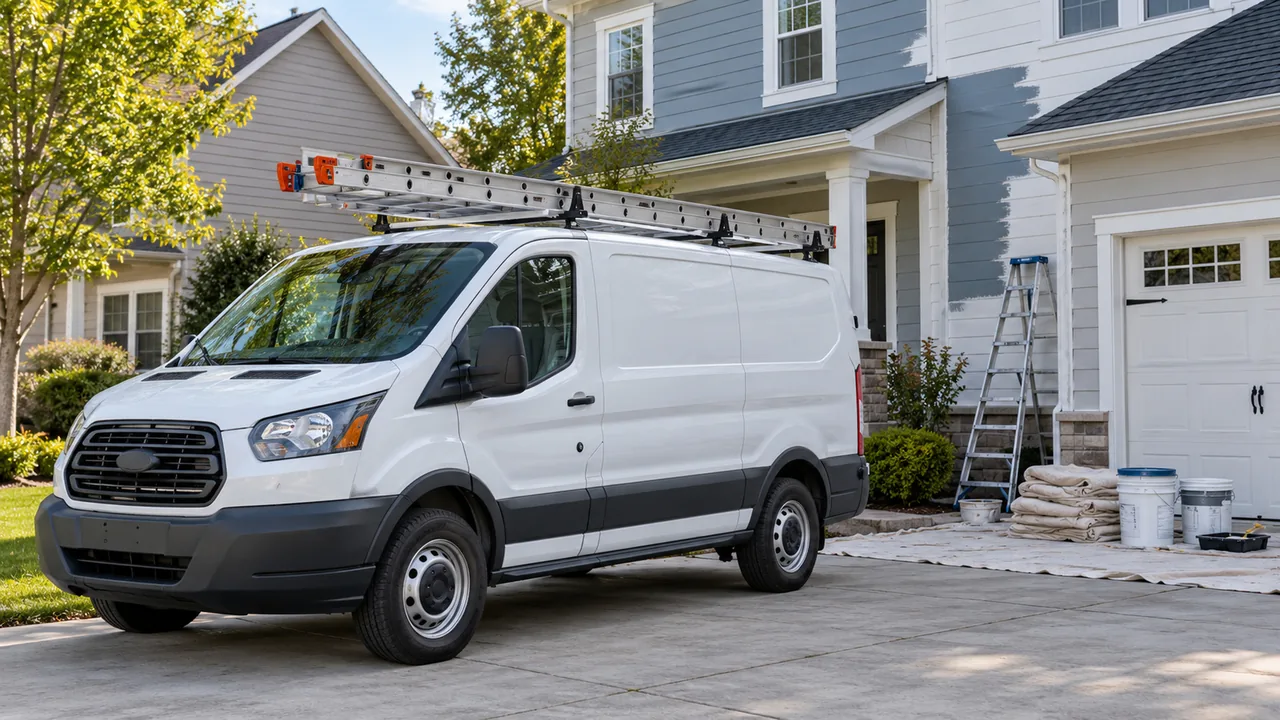
A painting company's fleet is mostly high-roof cargo vans and full-size pickups, and you can pick them out in traffic by the racks. Extension ladders, stepladders and aluminum planks ride on top. Inside are one or two airless sprayers, rolls of masking paper and plastic, a pile of canvas drop cloths and a row of five-gallon buckets of primer and finish. The license behind the work is broader than paint: CSLB's C-33 Painting and Decorating classification also covers stain, varnish, wallcoverings and the stripping or blasting that gets a surface ready. Repaint outfits that work apartment complexes and HOAs often add a pickup towing a small trailer with a pressure washer, and larger shops leave an enclosed trailer on long projects as a rolling paint locker. Our pages on commercial van insurance and work pickup coverage go deeper on each vehicle.
Painters rarely ride alone. A crew lead usually picks up two or three painters on the way to a tract of new homes or a commercial repaint, so a single van can carry most of a crew's working day. That matters to an underwriter for two reasons: One crash can hurt several people at once, and the person driving is often whoever holds the keys that week rather than a designated driver. Many owners let leads keep vans overnight, which puts the vehicle in a residential driveway or on a side street instead of behind a gate.
Weight rarely comes into it. A loaded cargo van or a 3/4-ton pickup usually stays far below the 26,001-lb GVWR mark where a commercial license starts, and few painting fleets own anything in Class 4–6 (14,001 to 26,000 lbs). The rating story is mostly about drivers, passengers and parking. A plank or ladder that slips off a rack at freeway speed is the painter's classic road claim, and because an unsecured load is so hard to defend, it usually ends up charged against your policy.
Official sources
A painting company's business auto insurance is built from separate coverages, and three do most of the work. Liability comes first, because it's what your customers check: HOA boards, property managers and general contractors usually want commercial auto liability insurance at a $1 million combined single limit on the certificate. The road claims painters see are ordinary, but they add up: a van rear-ending a car in early traffic, a pickup backing into a parked car in a crowded apartment lot, a ladder rack catching the edge of a carport.
Physical damage can repair or replace your own vehicles after a collision, theft, fire or vandalism. It's worth carrying on newer and financed vans and on vans fitted out with a bulkhead, shelving and a heavy-duty rack. Permanently attached racks and shelving can usually be counted in the van's value when it's scheduled, unlike loose sprayers and buckets. See physical damage coverage for trucks.
Painting is also a trade where people drive their own vehicles for work constantly. An estimator takes a personal SUV to bid a repaint, a lead runs to the paint store for another case of caulk, and a painter brings a forgotten extension pole to the job in their own truck. Hired and non-owned auto insurance is meant to protect the company when one of those trips ends in a crash and the injured driver sues the business along with the employee.
We quote painting fleets from a $1 million combined single limit, the number HOA management companies, apartment owners and builders tend to write into their agreements. If your work is mostly residential repaints and no customer asks for proof of a specific limit, $300,000, $500,000 or $750,000 is an option instead. Read the next commercial bid's insurance section before choosing; trimming the limit and then losing a repaint contract over the certificate is a poor trade.
Commercial painting work usually brings certificate requests with it. The property owner or general contractor may want to be named additional insured on your auto policy, may ask for a waiver of subrogation and may want wording that makes your coverage primary. Each one is typically its own endorsement, and setting them up when the policy is bound saves a scramble in the week a big job starts.
HOA work has one more quirk. The management company may want your certificate on file before the vans are allowed through the gate, and it may ask again at every renewal. A blanket additional insured endorsement, where available, saves requesting a new one for each association you paint.
A van or pickup used for painting work isn't usually the kind of vehicle that needs a California Motor Carrier Permit; the MCP permit guide explains the rule if you ever add a heavier truck.
Painting companies with high crew turnover usually get the hardest questions about drivers. A written rule on who may drive, an MVR pulled before anyone gets keys and a fresh check each year give the underwriter something to rate besides the loss runs. Dash cameras can help too, especially in parking-lot claims where the other driver's story shifts; fleet safety measures underwriters often credit lays out what each control can do.
Plenty of painting companies are an owner, one van and a small crew, and that's a perfectly good account to place. The owner is usually the main driver, so the owner's own driving record tends to carry most of the application. Business auto for one to four vehicles explains how carriers look at that size.
With five to ten vans, the carrier usually starts reading the company as a fleet. Who drives, how crews are organized, which leads take vans home and whether the loss runs show a pattern often matter more than the vans themselves. Insurance for a fleet of 5 to 10 trucks covers that stage in detail.
From 11 to 50 vehicles, the account is usually a commercial repaint or new-construction painter running several crews at once, often across more than one county. A written vehicle policy, driver training and a steady loss history tend to move the quote more than anything else at this size. New vans join by endorsement mid-term, so send the VIN and value before a van leaves the dealer. Spring repaint season often brings a van or two that only runs for a few months; tell us about seasonal vehicles so they come on and off the schedule cleanly instead of running unlisted.
Carrying the crew is what separates painting from most trades. A van that takes four painters to an apartment complex at dawn and brings them back after a full day on ladders spends a long time in traffic with every seat filled, and the driver is often the lead who also ran the job. Treat the drive home as part of the shift: Rotate drivers when you can, and don't send a lead who's been on a lift since sunrise across the county without a break. Every rider needs a real seat and a belt. Painters perched on buckets in the cargo area or sitting in a pickup bed for the short hop to the next building can turn a minor fender bender into a serious injury. Riding in the bed also runs into the law: California's Vehicle Code generally bars carrying anyone in or on the back of a pickup or flatbed on a highway unless that person is secured in a proper restraint system.
Job-site parking brings its own claims. Vans get squeezed onto HOA streets with red curbs, into apartment lots with tight turns and onto new-home tracts with open trenches and stacked lumber. Backing is where many small claims start, so a spotter or a backup camera is worth having on every van. Keep loose drop cloths and rollers out of the driver's footwell too; gear sliding under a pedal is an avoidable cause of a crash.
Official sources
It generally covers your liability to people outside the van. Injuries to your own employees riding along usually go through workers' comp instead.
When keys go to whoever is available that day, drivers the carrier never saw end up behind the wheel. List every driver or keep the keys with named leads.
Spring and summer hiring puts unknown driving records into your vans. Pull the MVR before the first shift, not after the first claim.
A ladder rack hitting a carport is property damage you caused, typically paid by liability. The dent in your own van would be a physical damage claim.
Pickups, flatbeds and dump trucks moving between job sites.
Commercial auto for general contractorsStake beds loaded with board for the next floor.
Commercial auto for drywall contractorsBox trucks bringing finished cabinets to the kitchen.
Commercial auto for cabinet makersTiming depends on the carriers and your loss history.
Have ready: vehicle list with VINs, driver list, current declarations page, loss runs.
Next Level Experience. Insurance Done Right.
Fleet quotes for California businesses running up to 50 trucks and vans.