Cargo vanGVWR
- Weight
- Up to 10,000 lbs typical
- CDL
- No
- Trades
- HVAC, alarm, painting, flooring

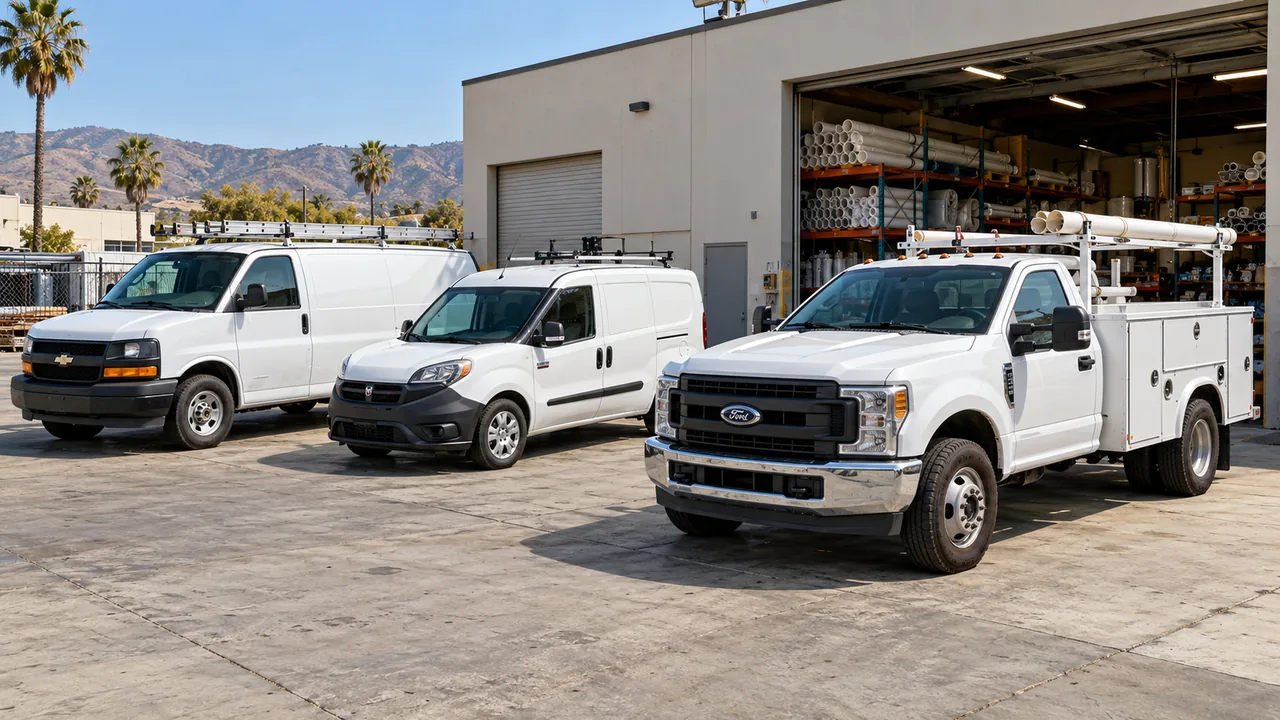
Transit, ProMaster, Sprinter and Express vans built out with shelving, ladder racks and partitions, insured as the working vehicles they are. One van or a fleet up to 50.
Quick answer
A cargo or Sprinter van used for work usually belongs on a commercial auto policy, even when it looks like a passenger van from the street. Most are rated under 10,001 lbs and need no CDL. Schedule the shelving and racks as part of the van and tell the carrier which vans go home at night.
Commercial Auto + Fleet Insurance
CaliforniaUp to 50 VehiclesWe’re here to help.
Full-size cargo vans sit at the light end of the commercial range. A Transit, ProMaster or Express is usually rated between about 8,500 and 10,000 lbs, and a long-wheelbase, high-roof Sprinter lands in the same neighborhood, with a few heavy-duty and dual-rear-wheel versions running somewhat higher. These vans stay well below the 26,001-lb line, so a regular license generally covers the drivers.
Light weight doesn't make a van a light risk. A high-roof van can scrape parking-garage ceilings and drive-through canopies, catch crosswinds on open freeway and offer almost no view out the back once shelving goes in. Drivers moving up from pickups and sedans often underestimate all three.
Vans are the lightest body on our commercial truck insurance overview. Whether any permit or filing applies to your vans depends on their rating and what they carry, and our guide to motor carrier insurance requirements in California explains how to tell.
Vans are often the default vehicle of the service trades, and underwriters see thousands of them, so they come to a van account with firm expectations. The questions they linger on usually aren't about the van at all. They're about who drives it, where it spends the night and what happens to it on weekends.
Take-home use sits at the center. When a technician drives the van home, it's typically rated where it's parked, the commute adds miles, and the line between work and personal use gets blurry. Most carriers want to know whether a spouse or a teenage child ever drives it, whether stops at the grocery store are allowed and where the van stays while its driver is on vacation. A one-page vehicle-use agreement, signed by every driver, can settle most of that.
Claims on van accounts tend to be frequent and small: backing, parking-lot contact, rear-end collisions in stop-and-go traffic and break-ins. Frequency often matters more than size here, because a steady trickle of small claims suggests to an underwriter that drivers aren't being managed.
Commercial customers, from property managers to general contractors, usually want a $1 million combined single limit on your certificate before your van parks at their site, so that's where we price vans first. Businesses doing only residential work can step down to $300,000, $500,000 or $750,000 when no agreement requires more.
Shelving systems, partitions, ladder and roof racks, inverters and floor liners can add a large share to a van's value. Upfits installed by the dealer or an upfitter should be listed on the schedule as part of the van so a total loss reflects them. See commercial truck physical damage insurance for how deductibles and valuation typically work.
Vans parked on the street overnight are exposed to break-ins and catalytic converter theft. NICB counted 64,701 catalytic converter theft claims nationwide at the 2022 peak, up from 16,660 in 2020; claims have fallen since, but California still leads. Comprehensive typically responds to damage to the van itself. And because vans spend hours in city traffic, UM/UIM for company trucks is worth a look for your drivers.
Official sources
Vans suit any trade whose tools and materials fit through a sliding door and need to stay locked up between calls.
Finishers' vans carrying mud, tape and banjos.
Drywall contractor commercial auto insuranceInstallers' vans with hardware, fillers and trim.
Cabinet installer commercial auto insuranceTools, adhesives and rolls of material for the day's install.
Flooring contractor commercial auto insuranceLadders on the roof, paint and sprayers inside.
Painting contractor commercial auto insuranceShelved service vans that usually go home with techs.
HVAC commercial auto insuranceParts vans that answer emergency calls day and night.
Plumbing contractor commercial auto insuranceLadder-rack vans for tenant improvements and service.
Electrical contractor commercial auto insuranceLight vans for low-voltage installs around town.
Alarm installer commercial auto insuranceKegs and cases to bars, restaurants and distributors.
Brewery delivery van insuranceA van's base rate is usually modest. What separates one van account from another is mostly the people and the parking.
| Factor | What it means for a work van |
|---|---|
| Overnight address | Each van is typically rated where it sleeps. A technician's apartment street in a dense ZIP can rate higher than a fenced shop lot. |
| Driver list | Van drivers skew younger; their ages, years licensed and MVRs often shape the account more than the vans do. |
| Personal use | A written rule on errands and other drivers takes the guesswork out, and underwriters tend to price guesswork. |
| Upfit value | Shelving and racks raise the physical damage value, and the premium for that coverage usually rises with them. |
| Roof height and length | High-roof, long-wheelbase vans can see more clearance and crosswind claims than standard-roof models. |
| Claim frequency | Several small backing and parking claims a year can move a renewal more than one larger loss. |
| Theft controls | Locked partitions, converter shields and GPS trackers show an underwriter the van is a harder target. |
Backup cameras, rear sensors and forward dashcams come standard on many new vans, and footage can settle a disputed parking-lot claim. Our page on fleet safety measures underwriters often credit explains what carriers tend to look for in a camera program.
Sprinters and other premium high-roof vans usually cost more to buy and more to fix. Parts can take longer to arrive, and body shops that work on them are fewer, so a van can sit for weeks after a modest collision. Rental reimbursement, where the carrier offers it, can keep a technician working while the van is down, and it's worth pricing for any van your schedule can't run without.
Height is the other Sprinter issue. Post a clearance sticker on the dash, keep drivers out of parking structures and make sure anyone new to the van knows how long it takes to stop when loaded.
Sole proprietors often start with a van titled in their own name and insured on a personal policy. Many personal policies limit or exclude vehicles used mainly for business, especially ones carrying tools and materials for paying jobs. Our comparison of business auto vs personal auto for a work truck explains where the line usually falls, and business auto insurance quote covers how a single work van is written on a business policy.
Businesses that start in vans often add a box truck once deliveries outgrow the cargo area or pallets enter the picture. The step tends to change the underwriting more than the paperwork: more weight, a longer stop and a blind spot that mirrors don't cover. Our page on insurance for business box trucks covers that body type, and our page on insuring a van compared with a box truck puts the two side by side.
It can. Sprinters and other high-roof vans may sit for weeks after a modest collision while parts arrive, so rental reimbursement, where the carrier offers it, can keep a California technician working while the van is out.
Many owners let techs take vans home without settling who else may drive or whether errands are allowed. A one-page agreement signed by every driver can answer the questions underwriters otherwise price as guesswork.
On van accounts, a steady trickle of backing and parking-lot claims tends to signal drivers nobody is managing. Coaching after each one and cameras that settle fault can matter more at renewal than a single repair bill.
When a parked van is broken into, comprehensive typically pays to fix the van, while the stolen tools, meters and shelf stock fall to an equipment policy. Without that separate policy, the contents loss may go uncovered.
Timing depends on the carriers and your loss history.
Have ready: vehicle list with VINs, driver list, current declarations page, loss runs.
Next Level Experience. Insurance Done Right.
Fleet quotes for California businesses running up to 50 trucks and vans.