Can a sole proprietor's truck be on business auto?
Usually, yes. Many carriers write a personally titled work truck on a business auto policy when it's used mainly for the business.

One truck, two kinds of policy. Which one a work truck usually belongs on, what each covers and what can go wrong when a business vehicle sits on a personal policy.
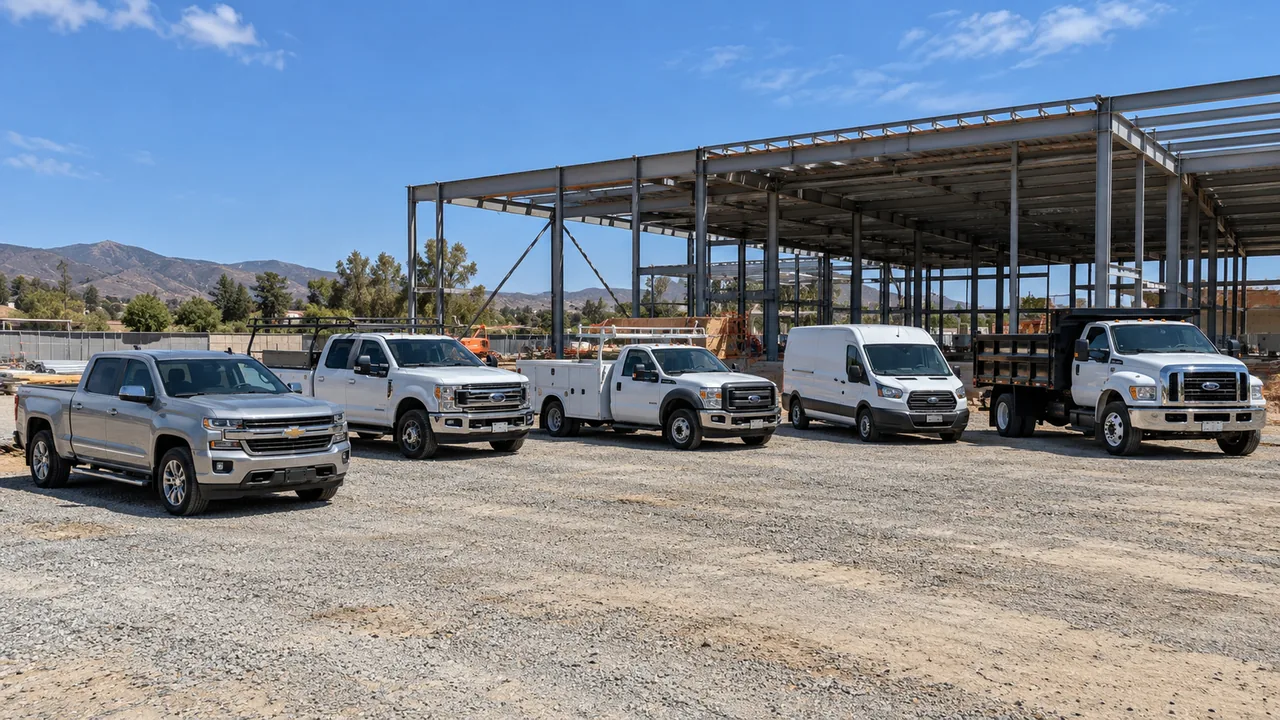
Quick answer
A work truck usually belongs on business auto if it's titled to a company, used mainly for jobs, deliveries or service calls, carries tools, materials or crews or is driven by employees. Personal auto may fit a truck that's personally owned and used mostly for commuting and errands, with only occasional, light work use. When the facts are mixed, use tends to decide more than title, and business auto is generally the safer home.
Commercial Auto + Fleet Insurance
CaliforniaUp to 50 VehiclesWe’re here to help.
| Feature | Business auto | Personal auto |
|---|---|---|
| Named insured | The business, whether a corporation, LLC or sole proprietor | You and your household |
| Who can drive | Employees and others with your permission | You, household members and occasional permissive drivers |
| Business use | Expected and rated | Often limited or excluded beyond incidental use |
| Vehicle types | Pickups, vans, service bodies, box trucks, dump trucks and trailers | Mostly cars, SUVs and light pickups; commercial bodies and heavier trucks are often ineligible |
| Certificates for customers | Issued routinely, with additional insured status by endorsement | Rarely available |
| Limits | A $1 million combined single limit is our default; $300,000, $500,000 and $750,000 are available | Usually split limits sized for a household |
| Employees' own cars and rentals | Hired and non-owned coverage can be added | Not covered for the business |
| Motor Carrier Permit filing | Available when the truck needs one | Not available |
The comparison generally holds whether you run one truck or a dozen. If you're at the single-truck stage, our page on insurance for one to four work trucks explains how carriers rate a small schedule, and the coverages themselves are laid out on the business vehicle insurance quote page. The limits row follows the Department of Insurance's commercial guide, which notes that personal auto typically separates bodily injury and property damage limits while business auto commonly uses one combined single limit.
Official sources
A truck's registration tells a carrier who owns it; its daily routine tells the carrier what it's insuring. A sole proprietor's pickup in a personal name that tows a trailer to jobs every weekday is a business vehicle in most of the ways an underwriter cares about. A company-titled SUV that an owner drives mostly on weekends is still a company vehicle and usually belongs on the business policy.
Signs a carrier reads as business use include racks, toolboxes, a utility body or lettering on the doors; trips to job sites and supply houses rather than to one office; and anyone other than the owner driving it for work. Each one tends to make a personal policy a riskier fit.
Sole proprietors often assume a truck titled in their own name has to stay on personal auto. In many cases, it doesn't. Many carriers will write a personally titled work truck on a business auto policy, showing the owner as an individual doing business under the company name. What they usually want to know is how the truck is used and who drives it.
The reverse often holds too. A family car that makes the occasional run to the bank can stay on personal auto, and the business can protect itself for those trips with hired and non-owned coverage rather than by moving the car.
The problem with a work truck on a personal policy rarely shows up until there's a claim. When a crash happens on the way to a job, the adjuster will usually ask where the driver was going and why. If the answer reveals regular business use the policy excludes, the carrier may deny the claim or, where the application misstated how the truck was used, rescind the policy. California's auto insurance statute generally lets a policy exclude particular uses only by describing them explicitly, so the exact wording of the personal policy's business-use exclusion is what the adjuster reads.
Even when a personal policy pays, it may stop short. A contractor whose employee is driving, or whose truck damages a customer's property, can find personal limits sized for a household rather than a job site. A business auto policy is built for those claims; see how much auto liability a fleet needs.
Official sources
Moving a truck is usually straightforward if you avoid a gap. Bind the business auto policy first, confirm the start date in writing, then remove the truck from the personal policy as of that date. Keep any household vehicles where they are.
Gather the VIN, the garaging address, the drivers' license numbers and the personal policy's declarations page, which shows your prior coverage. For a pickup, the insurance for company pickups page covers what carriers ask, and employees who drive their own cars for you are a separate question answered by hired and non-owned auto insurance.
Usually, yes. Many carriers write a personally titled work truck on a business auto policy when it's used mainly for the business.
A truck in your own name can still be a business vehicle. Carriers usually look at how it's used every day.
Towing to jobs is one of the clearest signs of business use. List the trailer and say what it carries.
If a personal policy won't respond to a job-site crash, the injured party's claim can fall on you and the company directly.
Timing depends on the carriers and your loss history.
Have ready: vehicle list with VINs, driver list, current declarations page, loss runs.
Next Level Experience. Insurance Done Right.
Fleet quotes for California businesses running up to 50 trucks and vans.