Bucket truckGVWR
- Weight
- Up to 33,000 lbs typical
- CDL
- Over 26,000 only
- Trades
- Tree service, electrical, roofing

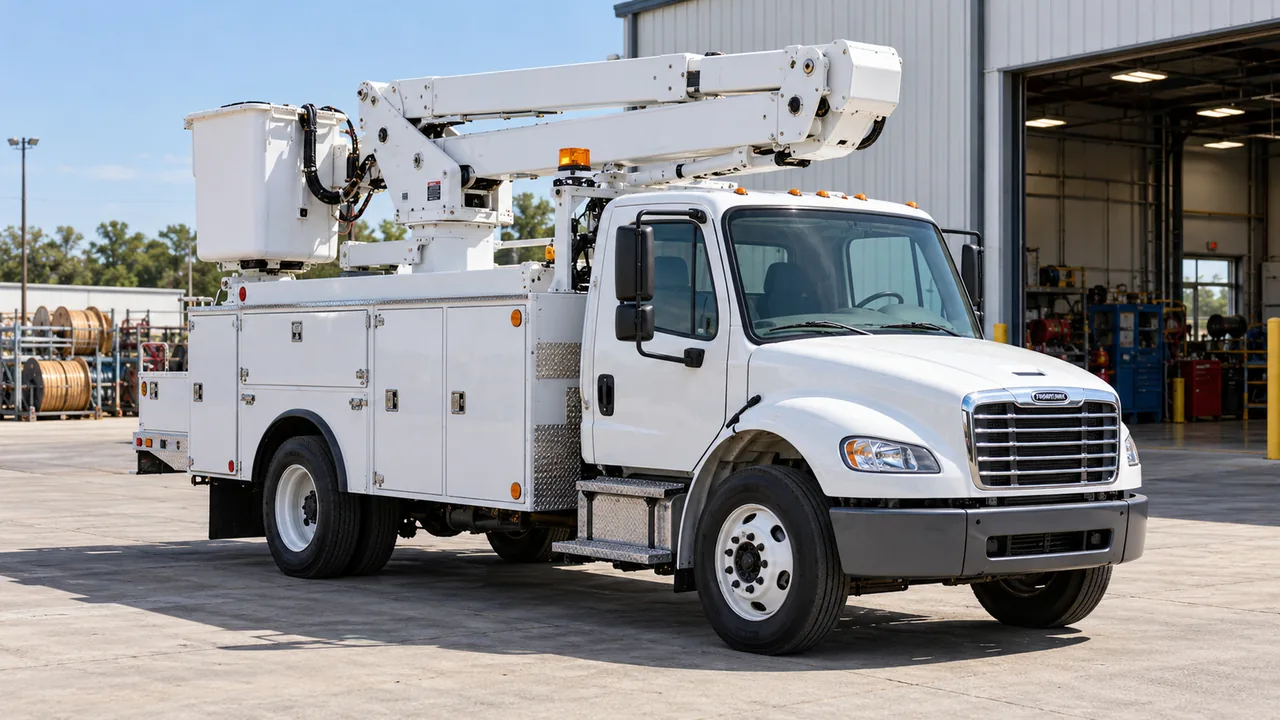
Aerial bucket trucks for tree crews and electricians, and boom trucks that land materials on roofs, insured as trucks on the road, with the aerial device handled where it belongs.
Quick answer
A bucket or boom truck typically goes on a commercial auto policy for the driving: liability on the road and physical damage to the truck. The aerial device or boom generally isn't treated as auto once it's working, so it's usually insured separately. Most run up to 33,000 lbs, and under DMV's rules the heavier units call for a Class B CDL.
Commercial Auto + Fleet Insurance
CaliforniaUp to 50 VehiclesWe’re here to help.
Bucket and boom trucks fall into two weight bands. Smaller aerial units for sign work, lighting and residential trimming sit on Class 5 and 6 chassis rated under 26,000 lbs, so a driver with a regular license can usually take them out. Larger tree-service and line-clearance units, with taller booms and heavy chip boxes, run on Class 7 chassis up to about 33,000 lbs, and those generally need a Class B CDL.
Boom trucks that set bundles and materials on a roof follow the same split: A light knuckle-boom on a stake bed may stay under the line, while a long-reach unit usually crosses it. The CDL question shapes the market too, since fewer carriers write heavy aerial units, and those that do tend to look harder at the drivers.
Bucket trucks sit near the top of the weight range on our hub for commercial truck insurance by body type. Heavier units can bring permit and filing requirements of their own; see California truck insurance requirements.
Official sources
Underwriters tend to see a bucket truck as two risks riding on one chassis. On the road, it's a tall, top-heavy medium-duty truck with a boom cradled over the cab, and its claims look like other heavy trucks': rear-end collisions, wide turns and strikes against low bridges, limbs and overhead lines when the boom isn't fully stowed. Parked at a job, it turns into a machine, outriggers down and boom extended over a street or a roof, with a worker in the bucket.
The auto policy is typically written for the first picture, and the second for equipment and general liability coverage. The hand-off between them is where gaps can open. An auto underwriter may ask whether the boom has a stow alarm, how the crew sets up cones and traffic control and whether anyone ever drives with the outriggers down, but the risk of the boom at work is usually priced somewhere else.
Tree service draws particular attention. Chip trucks and chipper trailers travel with the bucket truck, crews work near power lines and moving traffic, and storms send trucks out for long shifts. Electrical contractors' aerial units face similar line questions under tighter procedures. Carriers want written setup and traffic-control routines from both.
Utilities, cities and property managers that hire tree and electrical crews usually require $1 million in auto liability, written as a combined single limit, and many ask to be named as additional insured. Our aerial-unit quotes are built from that number. Smaller residential crews may opt for $750,000 where contracts allow. That's also the usual legal floor for an aerial unit with a Motor Carrier Permit, and since bucket trucks are rated well over 10,000 lbs, the $300,000 and $500,000 tiers generally don't fit them. Working beside traffic argues for the higher limit anyway.
Physical damage on the auto policy is typically for the truck: cab, chassis and body. The aerial device can be a large share of what the whole unit cost, so how it's covered matters. Many owners schedule the boom on an equipment policy and the truck on auto, then check that the two values add up to the full unit. Deductibles and valuation for the chassis are explained under physical damage coverage for trucks.
Official sources
Three of our trades run aerial and boom units, and each one puts the reach to different use.
Boom and conveyor trucks that land materials on the roof.
Roofing contractor commercial auto insuranceAerial units for lighting, signs and overhead service work.
Electrical contractor commercial auto insuranceBucket trucks working alongside chip trucks and chipper trailers.
Tree service truck insuranceAerial units are among the costlier trucks we place, and the price often depends on how the whole crew operates, not only the truck.
| Factor | What it means for a bucket or boom truck |
|---|---|
| Working height and boom type | Taller booms and insulated aerial devices make for costlier units, and where the device is insured can affect both policies. |
| GVWR | Units rated over 26,000 lbs generally need CDL drivers and draw a smaller market than lighter aerial trucks. |
| Work near traffic and lines | Roadside setups and line-clearance work raise liability questions; written cone and setup routines help. |
| Driver and operator | Most carriers want to know who drives, who runs the boom and whether they're the same person. |
| Chip trucks and trailers | A tree crew's bucket truck rarely travels alone, so the whole convoy is usually rated together. |
| Storm work | Long emergency shifts after storms add fatigue and night driving, and underwriters often ask how you manage them. |
| Age and upkeep | Good booms often sit on older chassis; maintenance records for both can reassure an underwriter. |
Cameras facing forward and toward the stowed boom can help reconstruct a strike claim, and we cover camera programs in more detail under fleet safety and claims defense.
Some of the costliest bucket truck claims happen at highway speed with nobody in the bucket. A boom that isn't fully cradled, or a bucket left slightly raised, can catch an overpass, a sign bridge, a traffic signal arm or a utility line. Damage to the structure and to other vehicles is generally an auto liability claim. How damage to the boom itself is handled depends on how the truck and the device are scheduled, which is a good reason to settle it before it happens.
The legal margin is thin. California generally caps a vehicle and its load at 14 feet, and Caltrans publishes a list of state-route clearances of 14 feet or less, so a boom left partly raised can put the truck over the limit without the driver noticing.
Stow alarms, a walk-around before every move and a rule that the operator, not a helper, confirms the boom is down are simple controls many underwriters like to see. Cal/OSHA's aerial device rules point the same way: They generally limit operation to authorized people and call for checking that the boom is properly cradled, with outriggers stowed, before the truck moves.
Official sources
A tree crew usually rolls as a set: the bucket truck, a chip truck with a dump body and a chipper trailer behind one of them, sometimes with a log truck or loader trailer as well. Each piece should go on the schedule. The chip truck is usually rated much like other dumps, covered on our dump truck insurance in California page, and the chipper trailer generally rides on the towing truck's liability while the chipper itself is insured as equipment; the insurance for work trailers page explains the split. The tree service truck insurance page covers the whole operation.
Contractors who need a bucket truck for a few weeks often rent one, sometimes with an operator. A bare rental you drive yourself is generally treated as a hired auto, so check that your policy's hired auto coverage extends to it before it leaves the rental yard; our page on hired and non-owned auto insurance explains how that works. A unit rented with an operator usually stays on the rental company's insurance, but ask for their certificate before work starts.
A bare bucket truck rented in California and driven by your own crew is generally a hired auto, so your hired auto coverage would need to extend to it. One rented with an operator usually stays on the rental company's insurance.
Owners sometimes insure the truck at its chassis value on auto and assume the aerial device is included. Unless the device sits on an equipment policy, the two values may not add up to what the whole unit cost.
A boom left slightly raised at highway speed is behind some of the costliest bucket truck claims. Stow alarms, a walk-around before each move and an operator who personally confirms the boom is cradled are what many underwriters look for.
Utilities, cities and property managers hiring tree and electrical crews commonly require $1 million in auto liability, often with additional insured status. A crew carrying less may not qualify for the work at all.
Timing depends on the carriers and your loss history.
Have ready: vehicle list with VINs, driver list, current declarations page, loss runs.
Next Level Experience. Insurance Done Right.
Fleet quotes for California businesses running up to 50 trucks and vans.