Do in-town arterials matter for a valley fleet?
They do. Fresno–Visalia loss runs often include rear-end and turning claims from signal-heavy arterials such as Shaw, Herndon and Blackstone avenues in Fresno, not just from county roads and SR-99.

Commercial auto for contractors, ag service fleets and suppliers in Fresno, Madera, Kings and Tulare counties, built around SR-99, long rural miles and the valley's fog and heat.
Quick answer
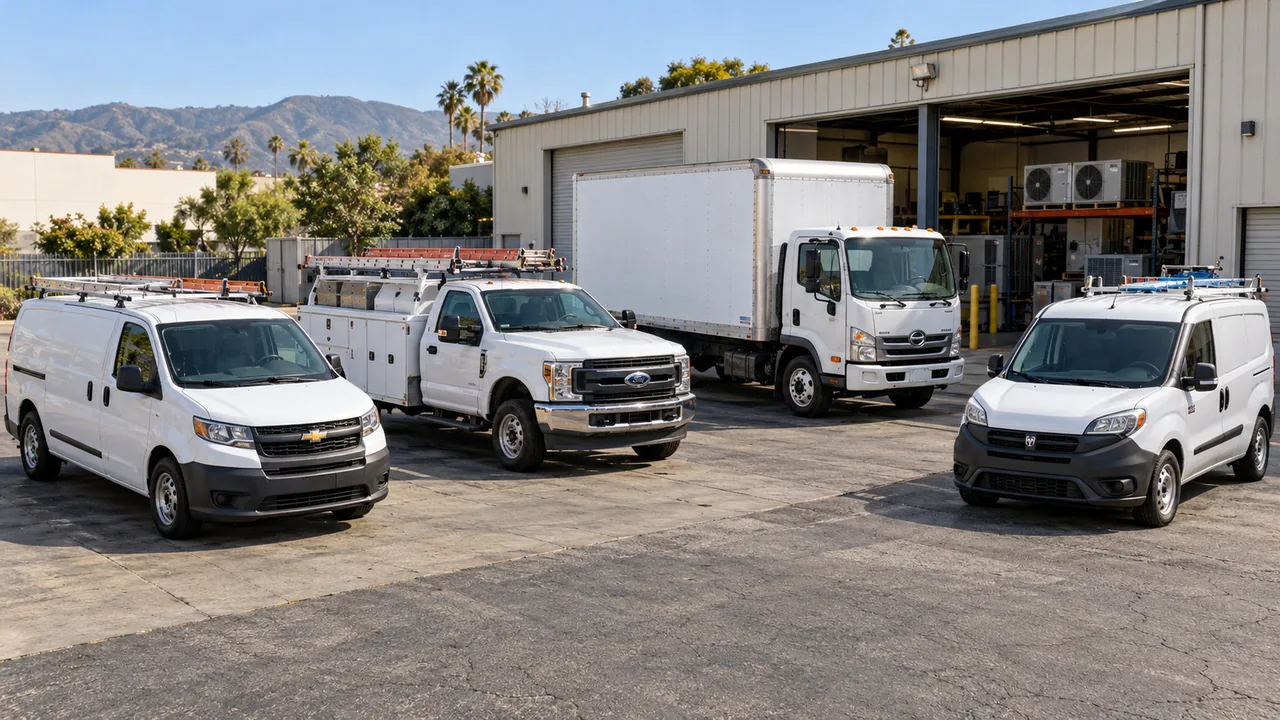
Fresno and Visalia fleets run long rural miles between orchards, packinghouses and towns, so radius and fog-season driving come up first. Pickups and service trucks usually go on one policy, each rated at the yard or farm where it parks, and our valley quotes generally begin at a $1 million combined single limit with national carriers.
Commercial Auto + Fleet Insurance
CaliforniaUp to 50 VehiclesWe’re here to help.
SR-99 carries the Fresno–Visalia area from Madera through Fresno, Selma, Kingsburg and Tulare toward Delano, and in Fresno it handles more than 100,000 vehicles a day. Farm trucks, commuters and freight share it, older interchanges with short on-ramps make merges tight, and a slow truck entering from a farm road can change the speed of a whole lane.
Off the freeway, the region is a grid of state routes and county roads. SR-41 runs north toward Oakhurst and Yosemite and south through Lemoore toward the I-5; SR-168 climbs from Clovis toward Shaver Lake; SR-180 heads east to Kings Canyon and west toward Kerman and Mendota; and SR-198 links Hanford and Visalia with the I-5 to the west and the Sequoia foothills to the east. SR-65 and SR-190 serve Porterville and the east side of Tulare County.
Inside the Fresno–Clovis area, SR-41, SR-168 and SR-180 meet SR-99 to form a small freeway grid, and wide arterials like Shaw, Herndon and Blackstone avenues carry most of the service traffic between neighborhoods and shopping centers. In Visalia, growth has pushed traffic onto SR-198 and Mooney Boulevard, and Hanford and Lemoore lean on SR-198 and SR-43. Signal-heavy arterials tend to mean rear-end and turning claims, the city side of a valley fleet's loss runs.
County roads run straight for miles, often without shoulders, beside irrigation canals and orchards, and a service truck can spend more of its day on them than on the highway. Intersections hidden by orchard rows and tall crops, slow tractors and equipment on the road at harvest and dust from field work often show up in the claims valley fleets report.
Distances are long. A company based in Fresno may serve Coalinga, Madera, Hanford and the foothill towns from the same yard, and a Visalia firm covers Porterville, Tulare and Exeter. Radius is one of the first things underwriters usually ask about, along with how many hours drivers spend behind the wheel on a harvest-season day.
The weather is extreme at both ends of the year. Summer heat is hard on tires, batteries and brakes, and on drivers, and winter brings tule fog, the dense ground fog that settles over the valley from roughly November through March. Garaging is mostly rural yards and farm properties, with industrial yards in Fresno, Visalia and Hanford.
Official sources
This page covers Fresno, Madera, Kings and Tulare counties. The cities it names, with populations:
Official sources
Agriculture drives the economy and much of the truck traffic. Tree fruit and citrus on the east side of Tulare and Fresno counties, raisins and grapes around Selma, Fowler and Kingsburg, nuts across the valley and dairies in Tulare and Kings counties support packinghouses, cold storage and processing plants that keep service trucks busy. Equipment repair companies with crane bodies keep harvest and packing equipment running, field welding trucks fix it where it broke, and electricians handle pumps, panels and cold storage.
Heat makes HVAC contractors' vans and trucks one of the busiest fleets in Fresno, Clovis and Visalia, and packinghouses and food plants rely on pest control service trucks for regular treatments. Hospitals, Fresno State, NAS Lemoore and the distribution centers along SR-99 add contract work with insurance requirements of their own.
Fresno, Clovis and Visalia have grown steadily, and new neighborhoods on their edges keep framers, roofers, plumbers and landscapers moving between tracts. Older central Fresno neighborhoods add remodel, repipe and HVAC replacement work on narrow streets with cars parked on both sides, which is where a service van's backing and sideswipe claims tend to come from.
Most fleets here are ag service pickups and service and utility body trucks, often driven off pavement onto orchard roads and canal banks. That mix of highway and dirt is normal for the valley, and describing it plainly on the application can help avoid surprises later.
Many valley contractors also carry a different kind of exposure on the same truck: pump parts and tools worth more than the pickup, chemicals for pest work, a customer's equipment on the trailer. Auto generally covers the vehicle and the liability of driving it; the rest typically belongs on equipment, pollution or bailee coverage placed separately. For permits and filings by vehicle weight, see the requirements guide for valley trucks, and business auto for one to four trucks covers how carriers usually rate a small operation.
Fleet growth here often follows the crop. A company that runs six trucks in spring may run ten from July to October, with seasonal drivers and borrowed or rented units. Add every truck before it goes to work and every driver before they drive, and ask about hired auto coverage ahead of the season to help keep a rented pickup from becoming a gap.
Tule fog is the hazard this part of the valley is known for: In November 2007 a 108-vehicle pileup on SR-99 south of Fresno involved 18 big rigs. Tule fog planning for Fresno and Visalia fleets and our guide to the SR-99 claim corridor cover driving rules and what underwriters tend to look for after a fog-season crash.
Theft from rural yards and job sites is the other recurring loss, from pickups and trailers to the tools and materials inside them; theft hot spots around Fresno and Visalia covers yard security and where auto coverage usually stops. Summer heat adds a steady stream of smaller losses, from blown tires on SR-99 to trucks that won't start at a remote job site.
Official sources
They do. Fresno–Visalia loss runs often include rear-end and turning claims from signal-heavy arterials such as Shaw, Herndon and Blackstone avenues in Fresno, not just from county roads and SR-99.
Fresno, Clovis and Visalia HVAC shops sometimes wait for the first heat wave to add vans and technicians, so new drivers are on calls before the carrier has seen their license numbers.
The November 2007 pileup on SR-99 south of Fresno, involving 108 vehicles and 18 big rigs, is the kind of loss that makes a written rule letting drivers stay parked when tule fog closes in matter to valley underwriters.
On a Fresno–Visalia service pickup, the auto policy generally answers for the vehicle and the driving, while pump parts worth more than the truck and the chemicals a pest crew carries usually call for equipment and pollution coverage placed separately.
Timing depends on the carriers and your loss history.
Have ready: vehicle list with VINs, driver list, current declarations page, loss runs.
This page covers fleets garaged anywhere in the region. These are the 53 cities and 81 ZIP codes within 35 miles of Fresno and 25 miles of Visalia. Cities with their own page here are linked.
Next Level Experience. Insurance Done Right.
Fleet quotes for California businesses running up to 50 trucks and vans.