
FlatbedGVWR
- Weight
- 10,001–33,000 lbs typical
- CDL
- Over 26,000 only
- Trades
- Framers, drywall, fence, roofing
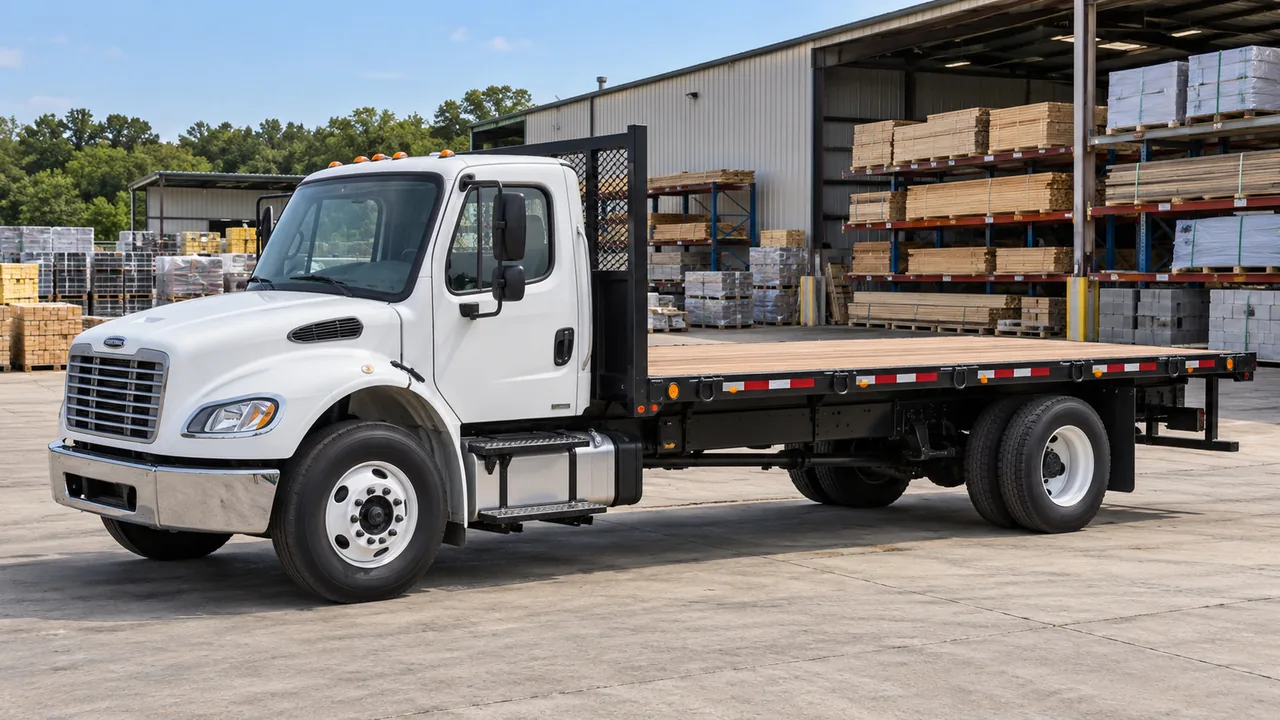
Flatbeds and stake beds that carry your own lumber, block, pipe, fencing and roofing or deliver what your supply yard sold. Rated as contractor and supplier trucks, from a single unit to fifty.
Quick answer
A contractor's or supplier's flatbed usually goes on a business auto policy as a working unit, not as a for-hire hauler. Carriers rate it largely on GVWR, the materials it carries and how loads are tied down. Most run 10,001 to 33,000 lbs, and under DMV's rules one rated over 26,000 lbs needs a driver with a Class B CDL.
Commercial Auto + Fleet Insurance
CaliforniaUp to 50 VehiclesWe’re here to help.
Flatbeds cover a wider weight range than any other body we write. At the light end is a one-ton dually with a 12-foot steel deck; in the middle are Class 6 stake beds with removable side rails, the workhorse of drywall and framing crews; at the heavy end are Class 7 trucks with 24-foot decks that a building supplier loads to the limit every morning.
The CDL line cuts straight through that range. A flatbed rated 26,000 lbs or less can usually be driven on a regular license, while one rated above it generally needs a Class B driver and draws a smaller, choosier group of carriers. Many supply yards keep one heavy unit for full loads and run the rest under the line, so more of their counter and yard staff can drive.
You can compare the weight classes across body types in our guide to California commercial truck insurance. A loaded flatbed may also need a Motor Carrier Permit, and our guide to California commercial truck insurance requirements explains when that applies.
Official sources
The first thing most underwriters want to know is whose load is on the deck. A framing contractor taking its own lumber to its own job, or a building supplier delivering what it sold, is generally running a contractor or supplier unit, rated with that business. A flatbed that hauls other people's goods for a fee is usually treated as a for-hire truck, written in a different market and outside what we place. Most accounts are plainly one or the other; if yours mixes the two, we'll sort it out before anything is quoted.
The second is securement. A flatbed load rides in the open: Lumber can creep forward on a hard stop, a bundle of conduit can slide off on a curve, and a strap that wears against a sharp edge can drop part of a load on the freeway. One loose bundle can strike several cars, which is one reason falling and shifting loads weigh so heavily with flatbed underwriters. Expect questions about straps, chains, edge protectors and headache racks and about who checks the load before the truck rolls.
After that come ordinary truck questions in flatbed form: wide right turns with material hanging past the deck, backing into cramped residential job sites and drivers who double as yard hands and load the truck themselves.
Building suppliers and general contractors often write a $1 million combined single limit into delivery terms and subcontracts, so that's where we begin a flatbed quote. Where contracts allow, $750,000 can be an option, and state law generally sets it as the floor for a flatbed that needs a Motor Carrier Permit, as most do; the $300,000 and $500,000 tiers are for vehicles the permit doesn't reach. A dropped load that involves several vehicles is the kind of claim where a thin limit gets tested.
For physical damage, schedule the deck, side rails, toolboxes, headache rack and any hoist or tilt mechanism together with the truck. A stake bed's body is often rebuilt or replaced during the life of the chassis, so update the value when that happens. Valuation and deductibles are covered in more depth on our page about comprehensive and collision for work trucks.
Materials you own and carry to your own jobs are usually a property question, not cargo. A supplier delivering goods it has already sold is in a different spot, since the customer may own the load the moment it leaves the yard; that's where truck cargo coverage in California typically fits.
Official sources
Flatbeds belong to the trades that move long, heavy or awkward material: anything that won't fit through a van door or needs a forklift to come off.
A flatbed or stake bed for materials, behind the superintendent's pickup.
General contractor commercial auto insuranceLumber packages and hardware from the yard to the slab.
Framing contractor commercial auto insuranceStake beds stacked with board, studs and track.
Drywall contractor commercial auto insuranceBundles, underlayment and tear-off on decks with side rails.
Roofing contractor commercial auto insurancePosts, panels and rolls of chain link, often with a trailer behind.
Fence contractor commercial auto insuranceSupplier deliveries of lumber, pipe and block to job sites.
Wholesale distributor truck insuranceFlatbed truck insurance cost in California is set truck by truck, so there's no single price. Carriers typically start from the GVWR, the deck and the drivers, then adjust for what rides on the bed and how it's tied down. A light stake bed hauling drywall usually rates differently from a Class 7 flatbed carrying steel.
Flatbed premiums often turn on the load as much as the truck. These are the factors we see moving a flatbed quote most.
| Factor | How it plays on a flatbed |
|---|---|
| Load type | Lumber and drywall usually rate differently from steel, pipe or concrete block, where a shifted load is heavier and harder to stop. |
| Securement routine | A written pre-trip load check, edge protectors and enough straps for the heaviest load help show the falling-load risk is managed. |
| GVWR and deck length | A one-ton dually with a short deck typically sits in a different rating tier from a Class 7 truck with a 24-foot bed. |
| Contractor or supplier use | Carrying your own materials or products you've sold generally keeps the truck in a contractor or supplier class. Hauling for others for pay does not. |
| Street-side unloading | Unloading from the street near traffic, with a forklift or loader, raises liability questions a dock delivery usually doesn't. |
| Drivers | Most carriers want yard hands who drive now and then listed and checked like full-time drivers, especially on trucks over 26,000 lbs. |
| Overnight parking | Loaded flatbeds on open lots invite material theft, generally a property question, and vandalism to the truck, which usually falls under auto. |
Most underwriters give more weight to evidence than to promises. Photos of a typical secured load, a pre-trip checklist and camera footage all help, and our page on how dashcams and telematics can help protect a fleet shows what each one can do when a claim is contested.
A commercial flatbed insurance quote comes together faster when the details are on hand. These four steps cover what carriers usually ask.
When a load comes off a flatbed, the claim tends to turn quickly to how it was tied down. Adjusters and attorneys ask how many straps or chains were used, whether their ratings matched the weight, whether edges were protected and whether a headache rack was there to stop forward movement. A driver who can show a routine, and a company that trained it, is usually far easier to defend.
California law sets the baseline: In general terms, Vehicle Code 23114 bars driving a vehicle on a highway unless it's built, covered or loaded so its load can't drop, leak, blow or spill, and it adds covering rules for gravel and other aggregate. Loose material such as tear-off, gravel or green waste should ride covered so it can't blow or spill onto the road. Simple habits often help most: recheck straps after the first few miles, keep spare straps on the truck and photograph each load before leaving the yard.
Official sources
Many supply flatbeds carry a piggyback forklift on the rear or a knuckle-boom loader behind the cab. On the road, the forklift adds to the truck's weight and usually to its liability picture. Once it comes off to unload, it's generally treated as working equipment rather than auto.
Damage to the forklift or loader itself typically belongs on an equipment policy. Liability while it's operating can fall under general liability rather than auto, depending on the policy wording, so tell us what's mounted on each truck, and we'll flag where each piece likely sits.
A flatbed or landscape body with a hydraulic hoist is often rated closer to a dump truck than a plain flatbed, because it carries loose material and dumps on site; our California dump truck insurance page covers how carriers treat those. Fence and framing crews often pull a gooseneck or bumper-pull trailer as well. A gooseneck heavier than 10,000 lbs, behind a truck that brings the pair past 26,000, generally means a Class A for the driver, and the trailer typically needs its own line on the schedule for physical damage; see equipment trailer insurance.
Often, yes. A California flatbed or landscape body with a hydraulic hoist carries loose material and dumps it on site, so many carriers rate it closer to a dump truck than to a plain flatbed.
Stake bed bodies are often rebuilt or replaced while the chassis keeps running. When the new deck, rails or headache rack never reach the schedule, a total loss can settle on the old figure.
Most flatbed underwriters weigh falling-load risk heavily. Photos of typical secured loads, a written pre-trip strap check and spare straps on every truck show the routine exists, and they can help again if a claim is disputed.
A flatbed carrying your own materials, or goods your yard sold, generally stays in a contractor or supplier class. Hauling other people's freight for a fee typically makes it a for-hire truck, written in a different market we don't place.
Next Level Experience. Insurance Done Right.
Fleet quotes for California businesses running up to 50 trucks and vans.