91 Enterprise LLC
March 24, 2026
We are using Gleason insurance for our commercial auto policy and GL policy. David is the best insurance broker I've worked with — very honest, responsive, and knowledgeable. Highly recommend.

Five to ten trucks, vans and pickups on one commercial auto policy, with driver rules a carrier can price and room for the next unit. This is the fleet size we focus on most, across all 25 trades we write.
Quick answer
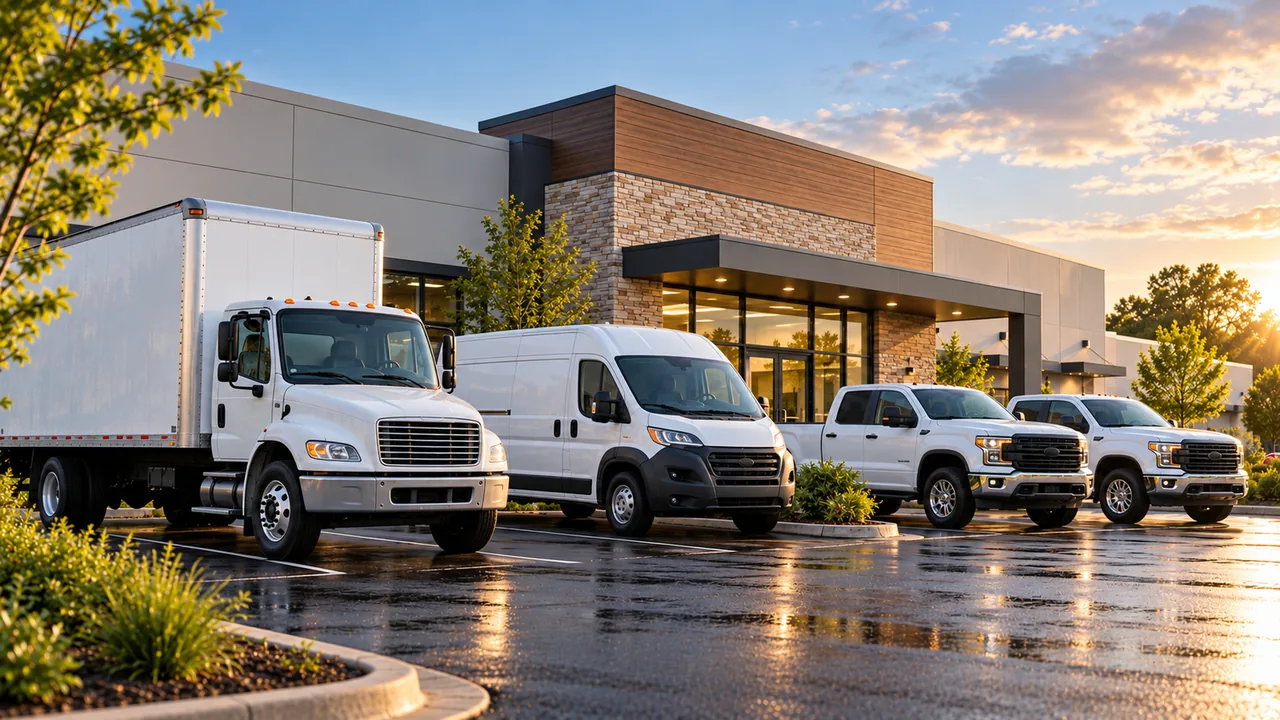
A California business running five to ten work vehicles usually belongs on one commercial auto policy that lists every truck and van, renews on one date and applies one written driver standard. Many carriers begin reading an account as a fleet at about five power units, so driver screening, overnight parking and how you add the next vehicle start to shape the quote. For a fleet this size, we open liability at a $1 million combined single limit.
Commercial Auto + Fleet Insurance
CaliforniaUp to 50 VehiclesWe’re here to help.
Most businesses reach five vehicles one truck at a time. The first pickup went on whatever policy the owner already had, a van was added when the first technician was hired, and by the sixth or seventh unit there may be two or three policies with different carriers, renewal dates and limits. At this size, carriers typically prefer to see the whole schedule in one place, and so do the general contractors and property managers who ask you for certificates.
Consolidating usually means one liability limit across every vehicle, physical damage deductibles you choose unit by unit and one certificate that names the company instead of a single truck. It also hands the underwriter one loss history to read, which tends to help a fleet with a clean record and puts an old claim in context instead of letting it stand alone.
The coverages inside that policy are usually the same ones described on our business vehicle insurance page, and the commercial truck insurance quote page sorts them by body type. We lay out the trade-offs of combining policies on a separate page: fleet policy or separate truck policies. Many commercial fleet insurance programs start at about this size.
With a handful of trucks, the owner often knows every driver personally, which is exactly why driver standards stay informal for so long. Underwriters can't rate a handshake. At five to ten vehicles, they usually ask for a full driver list with license numbers and dates of birth, then order a motor vehicle record (MVR) on each person during underwriting.
What they look for is fairly consistent from carrier to carrier: recent at-fault accidents, speeding and other moving violations, any DUI and suspensions. A single driver with a serious violation can affect the price of the whole account, because in a fleet this small, one driver is a large share of everyone behind the wheel.
Newly licensed and very young drivers tend to be the most common hiring question at this size. Some carriers accept them with a clean record and conditions; others decline them. Ask before you hand over keys, not after.
Small fleets grow in steps: A new hire needs a van, a large contract calls for a second dump truck, or a trailer turns up at an equipment auction. On a scheduled policy, a new unit is typically added by endorsement and priced for the months left in the term, rather than waiting for renewal.
The step that often gets skipped is calling before the vehicle goes to work. Depending on how your declarations page describes covered autos, a newly bought truck may have only conditional automatic coverage, and sometimes none for physical damage, until the carrier hears about it. For how those symbols generally work, see scheduled autos vs any auto coverage.
Taking a vehicle off generally works the same way in reverse. A truck that's sold or parked for good can come off the schedule, and the unused premium is usually credited back.
Carriers generally rate each vehicle at the ZIP where it parks overnight, not the address on the business license. A fleet of seven often sleeps in three or four ZIPs at once: two units at the shop, a few in employees' driveways, one at the owner's house.
Take-home vehicles are usually acceptable when they're disclosed. A van listed at the shop that really sleeps in a technician's driveway across the county is a misstatement a carrier can uncover after a claim. Schedule each unit where it actually spends the night and mention any fenced yard or gated lot, since theft exposure at the garaging address is one of the things underwriters weigh.
Work-truck theft hasn't fallen the way overall vehicle theft has. The California Highway Patrol counted 1,802 commercial trucks stolen in 2025, down 5.06%, while thefts of all vehicles dropped 24.3%. Comprehensive coverage is typically what pays when a truck disappears; our page on physical damage coverage for trucks explains how a stolen unit is generally valued.
Official sources
Few underwriters expect a seven-truck contractor to employ a safety director. What underwriters usually want at this size is short and real: a one- or two-page vehicle policy, MVR checks on a calendar, a rule against handheld phone use behind the wheel and a way to find out what happened when a truck is in a crash.
Forward-facing dashcams are a common first upgrade for small fleets, partly because footage can settle arguments about who hit whom. Telematics, meaning GPS, speed and hard-braking data, can help too, mostly when someone reads the reports and talks with the driver. Our guide to how dashcams and telematics can help protect a fleet walks through what each tool can do once a claim is filed.
Put whatever you do in writing and send it with the submission. A carrier generally credits only the controls it knows about.
Reviews of Gleason Insurance Brokers, LLC, the licensed agency behind this site.
91 Enterprise LLC
March 24, 2026
We are using Gleason insurance for our commercial auto policy and GL policy. David is the best insurance broker I've worked with — very honest, responsive, and knowledgeable. Highly recommend.
Fito Plumbers
February 20, 2026
We have been working with David at Gleason Insurance Brokers for 8+ years. David always goes above and beyond to make sure we have the appropriate coverages. He explains everything in detail and makes sure we feel confident and understand all of our policies. He is always available and responds right away!
Barry Stay
February 17, 2026
David provides great service and I highly recommend him for your insurance needs.
Victor Alvarez
February 11, 2026
Great customer service!! Highly recommend it.
Marissa Martinez
February 6, 2026
The best insurance broker in California. Construction insurance requirements are constantly changing, and if it weren't for David, it would be impossible to keep up. He is friendly, knowledgeable, and ready to tackle all of our issues. Definitely recommend Gleason Insurance Brokers.
Wing Sze Lam
August 26, 2025
The associate delivered outstanding and professional service.
Miguel Sanchez Nunez
August 18, 2025
I'm really glad I worked with David to find commercial auto insurance. He made the process quick and easy, and most importantly, he helped me find a policy that fits my business needs and my budget. If you're a business owner looking for reliable and affordable commercial auto insurance, I highly recommend reaching out to David.
Reviews reflect individual client experiences and are not a guarantee of coverage, pricing or results.
Five to ten vehicles is where many of the trades we insure settle: a plumbing or HVAC company with six service vans, a landscaper with four crew pickups and three trailers, a general contractor running pickups and a dump truck or a wholesale supplier with a few box trucks delivering to restaurants and job sites.
Most of these units are rated under 26,001 lbs GVWR, so drivers rarely need a commercial license, and that keeps your hiring pool wide. Adding one heavier dump or flatbed usually changes the questions for that unit, including CDL drivers and possibly a Motor Carrier Permit. The California dump truck insurance page covers that step, and our guide to how the MC 65 M filing works covers the permit side.
Each trade below has its own page on the vehicles and claims it sees. Our page on HVAC fleet and van insurance deals with take-home vans in detail, and the one on landscaper commercial auto insurance with trailers.
Short, specific answers usually work better than long, vague ones. If you don't know an answer yet, say so; we can usually begin shopping while the rest comes together.
We build small-fleet quotes on a $1 million combined single limit, because that's the figure most job contracts and property managers write into their insurance requirements. When no contract calls for it, $750,000, $500,000 and $300,000 are the usual lower choices, though a lower limit often moves the price less than owners expect.
Certificates turn routine at this size. A customer may want to be named as an additional insured, ask for a waiver of subrogation or require advance notice if the policy cancels, and we can usually issue those as jobs come in. For how a combined single limit works, see how much auto liability a fleet needs.
Two coverages small fleets often add once they have employees: hired and non-owned auto coverage, which generally protects the company when staff use their own cars, and UM/UIM for company trucks, which may pay when your driver is hurt by someone with no insurance.
Missing loss runs often slow things down more than anything else, so request them early. When the list is ready, request a commercial fleet insurance quote from the slider at the top of this page.
To many carriers, yes. Somewhere around five power units, underwriters often start treating the account as a fleet, with one schedule and driver standards they can price.
Owners who consolidate sometimes leave a favorite truck where it was. Two policies usually mean two limits, two renewals and a gap in the loss history the new carrier sees.
Once drivers aren't just the owner and relatives, carriers usually want to know how drivers are screened. A written MVR rule answers that before anyone asks.
A van rated at a driver's home ZIP may cost more than one rated at the shop, but a van rated at the wrong address can invite a dispute after a loss.
When a dispatcher hands out the keys and drivers come from outside.
Fleet insurance for 11 to 25 vehiclesWhere loss runs and a written safety program help set the price.
Fleet insurance for 26 to 50 vehiclesOne to four work trucks, with single units welcome in 25 trades.
Business auto insurance for 1 to 4 vehiclesTiming depends on the carriers and your loss history.
Have ready: vehicle list with VINs, driver list, current declarations page, loss runs.
Next Level Experience. Insurance Done Right.
Fleet quotes for California businesses running up to 50 trucks and vans.