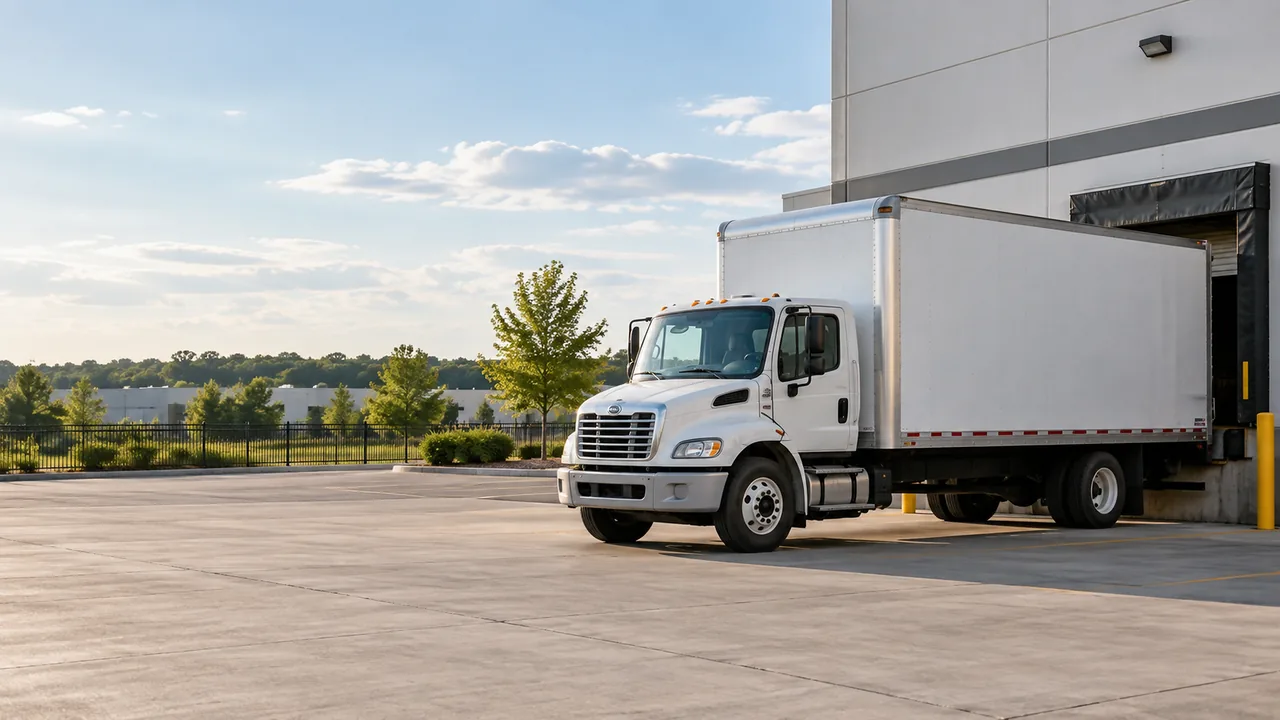
Box truckGVWR
- Weight
- 10,001–26,000 lbs typical
- CDL
- No (most)
- Trades
- Cabinets, flooring, distributors, breweries

Commercial auto for distributors and suppliers delivering to other businesses: box trucks with liftgates, flatbeds and stake beds, from one truck to fifty. Quoted with top-rated national carriers, with motor truck cargo arranged alongside.
Quick answer
A California distributor delivering to businesses usually needs one commercial auto policy for its box trucks, flatbeds and stake beds, plus motor truck cargo for the goods on board. We write business-to-business routes, not home delivery. Vendor agreements commonly expect a $1 million combined single limit.
Commercial Auto + Fleet Insurance
CaliforniaUp to 50 VehiclesWe’re here to help.
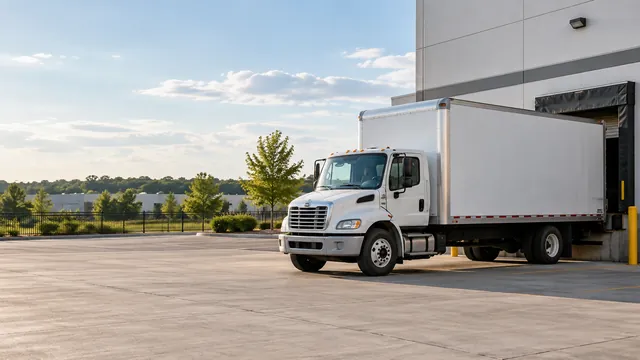
Distributor fleets are built around the box truck: a Class 4–6 chassis with a dry van body, usually a liftgate, running a daily route to stores, restaurants, shops and contractors. Flatbeds and stake beds carry what won't fit in a box, such as pipe, lumber, rebar, irrigation supplies and palletized block, sometimes with a truck-mounted forklift or a knuckle boom to set the load. Sales reps and parts runners add pickups and cargo vans to the mix, and box truck insurance in California covers the main unit in more detail.
Most distributor trucks are two-axle units rated under 26,001 lbs GVWR, so route drivers generally don't need a commercial license, which keeps the hiring pool wide. The trade-off is that a driver without commercial training may be new to a heavy box truck in tight streets, loading docks and alleys, and many underwriters read those MVRs closely. Some building supply yards also run boom-equipped trucks that land drywall or roofing on upper floors, and most carriers want the boom described along with the truck. The heavier diesel box trucks in a distributor fleet also generally need periodic emissions tests under CARB's Clean Truck Check program, and an overdue test can block the registration renewal at DMV.
Routes shape the risk. A supplier running a fixed morning route to contractors in one county is a different account from a distributor whose trucks cover several regions on rotating schedules. We write business-to-business delivery: wholesaler to retailer, supply house to a contractor's shop or job site, food and janitorial distributor to restaurant and office. Home delivery and last-mile parcel routes are a different market, and we don't place them.
Official sources
On a delivery route, liability tends to follow the stops. Each one means parking where a box truck barely fits, backing to a dock or an alley door and pulling back into traffic, so the claims on a distributor's loss runs are often low-speed: mirrors, awnings, parked cars, a pole in the alley. The costlier crashes tend to come between stops, at intersections and freeway merges with a full load. Most vendor agreements and retail chains look for a $1 million combined single limit; that makes it the liability figure we lead with for distributors.
The goods on the truck are a separate question from the truck itself. Cargo coverage can pay when a load is damaged, stolen or lost in a covered event while you're carrying it, and many customers expect it. How a form treats goods you've sold but not yet delivered, compared with your own inventory moving between branches, deserves a broker's read before you buy; see cargo insurance for distributors.
Physical damage generally covers the truck and its permanently attached equipment, including liftgates, cranes and refrigeration units, when they're valued correctly. A liftgate bent against a dock is a familiar distributor claim, so schedule upfits at their installed cost. Stake bed truck insurance covers the open-deck units.
Retail chains, restaurant groups, grocers and large contractors often build insurance requirements into their vendor agreements. For auto liability, the common ask is a $1 million combined single limit, often with the customer named as additional insured and sometimes with proof of cargo coverage. When your agreements allow lower, we can also quote $300,000, $500,000 or $750,000. A few large accounts want more than $1 million in total, which is usually umbrella territory.
Whether a distributor's heavier box trucks and flatbeds need a Motor Carrier Permit depends on their weight and how they're used. Our guide to the California Motor Carrier Permit explains the test, and the carrier typically files with the DMV once the policy is bound.
Cargo usually carries its own limit, separate from auto liability. Set it from the most valuable load a truck carries on a normal day rather than the average and tell us about high-value or high-theft loads such as wine and spirits, copper wire, tools or electronics.
Customers tend to ask for certificates at onboarding and again every year, often through a vendor compliance portal. A distributor with a long customer list can lose a lot of time to certificate requests, so keep us on the list of contacts, and we'll reissue them when the policy renews. Cargo certificates follow the same pattern: Many customers want the cargo limit and the named insured to read exactly as the vendor agreement does.
Official sources
Pre-loading trucks the night before saves time in the morning, and it's also a theft exposure: A loaded box truck in an open lot can be a target. Distributors who keep loaded trucks inside a fenced, lit yard with cameras and who can track trucks by GPS have an answer ready. Our fleet safety page explains how cameras and telematics can help on the driving side as well.
Driver turnover is the other theme. Route drivers move between distributors often, so many carriers want to know how soon a new hire runs a route alone, whether a supervisor rides along first and whether you recheck MVRs for drivers who have been with you for years, not just the new ones.
A supplier with one delivery truck is usually quoted much like a small business auto policy, with a cargo form added alongside. At five to ten trucks, the carrier typically sees a route operation and wants driver standards in writing, including how a new driver is trained before taking a route alone; fleet insurance for 5 to 10 trucks explains that stage.
Distributors past ten trucks often run more than one branch. Each branch's garaging ZIP is generally rated on its own, so a truck based at an Oakland branch and the same truck at a Fresno branch can rate differently, and moving trucks between branches should be reported. Seasonal peaks often bring rental trucks, and a rented box truck should have hired auto coverage on your policy before it's loaded. At 26 trucks and more, fleet insurance for 26 to 50 vehicles turns largely on your safety program and claims trend.
Branches that hire their own drivers should still follow one set of standards, since the carrier usually rates one account. Larger distributors sometimes add tractor-trailers for transfers between their own warehouses; once a unit is over 45,000 lbs GVWR, our options are often less competitive, and we'll tell you that before you plan around them. Opening a will-call counter at a new branch usually adds a pickup or van for hot-shot runs to contractors; put it on the schedule before its first run.
Many distributors run full-service leased box trucks rather than owning them. The lease usually spells out who insures what: Some include the lessor's liability coverage, while others require the distributor to carry auto liability and physical damage, with the leasing company named as additional insured and loss payee. Read that section before you sign and send it to us, because a mismatch tends to surface only after a claim. Leases that put maintenance in the lessor's hands can help at underwriting, since service records are documented, so send the maintenance terms too. When the lessor drops off a substitute truck while yours is in the shop, make sure it's covered the day it arrives. Some leases also bundle telematics, and that data may count in your favor with an underwriter, so ask the lessor for access.
Short-term rentals are a separate question. A box truck rented for a holiday peak or to cover a truck in the shop is generally a hired auto, and the rental counter's coverage may not match what your customers require. Tell us how often you rent, from whom and for how long, and the policy can be set up to treat hired units the way it treats your own. Commercial auto insurance in California explains how a business auto policy is built.
Goods you hold for customers are usually a motor truck cargo question. Your own inventory in transit may need a different form, so ask which one you have and have a broker read its definition of covered property.
One residential stop can change the risk the policy was written for, and home delivery is a market we don't place. Tell us before any route starts serving homes.
Night-before loading is efficient, but a full box truck in an open lot is often what thieves look for. Park loaded trucks inside a secured yard and set a GPS alert for any truck that moves after hours.
A limit matched to the average load can leave the difference uninsured on the day the largest load is stolen. Look at the most valuable load of the past year when you set it.
Keg vans and refrigerated box trucks serving bars and restaurants.
Commercial auto for breweriesTiming depends on the carriers and your loss history.
Have ready: vehicle list with VINs, driver list, current declarations page, loss runs.
Next Level Experience. Insurance Done Right.
Fleet quotes for California businesses running up to 50 trucks and vans.